A sand-and-light filter wipes out the microplastics shed by polyester clothes in the wash, in lab tests
Chemists at the Institute of Chemical Technology (ITQ, CSIC-UPV) in Valencia, Spain, combine a bed of titanium dioxide-coated sand with ultraviolet light in a single step: the filter traps PET microfibres from the water used to wash polyester clothes and the light breaks them down into simpler compounds. The same material treated more than 50 litres, with no added chemicals and no titanium left in the water. The caveat: it is a lab test, with detergent-free water, takes more than two and a half hours and still needs improving.
Every wash of polyester clothing releases thousands of plastic microfibres into the water, and they end up in rivers and seas. A team at the Institute of Chemical Technology (ITQ), a joint centre of Spain’s CSIC research council and the Polytechnic University of Valencia, has designed a system that does not just trap them but makes them disappear.
“With the system we have developed, as well as separating the microplastics, we achieve their total degradation,” say the researchers, from ITQ’s Pama group. Their work is published in Chemical Engineering Journal.
Sand that filters, light that destroys
The material is commercial sand mixed with silica microspheres coated with titanium dioxide. It sits inside a tube through which water flows continuously, lit by ultraviolet LEDs:
- The sand traps the microfibres.
- The light activates the titanium dioxide, which produces substances that break them down into simpler compounds.
Without light, the sand bed holds back only about 70% of the microplastics and eventually clogs, according to the university.
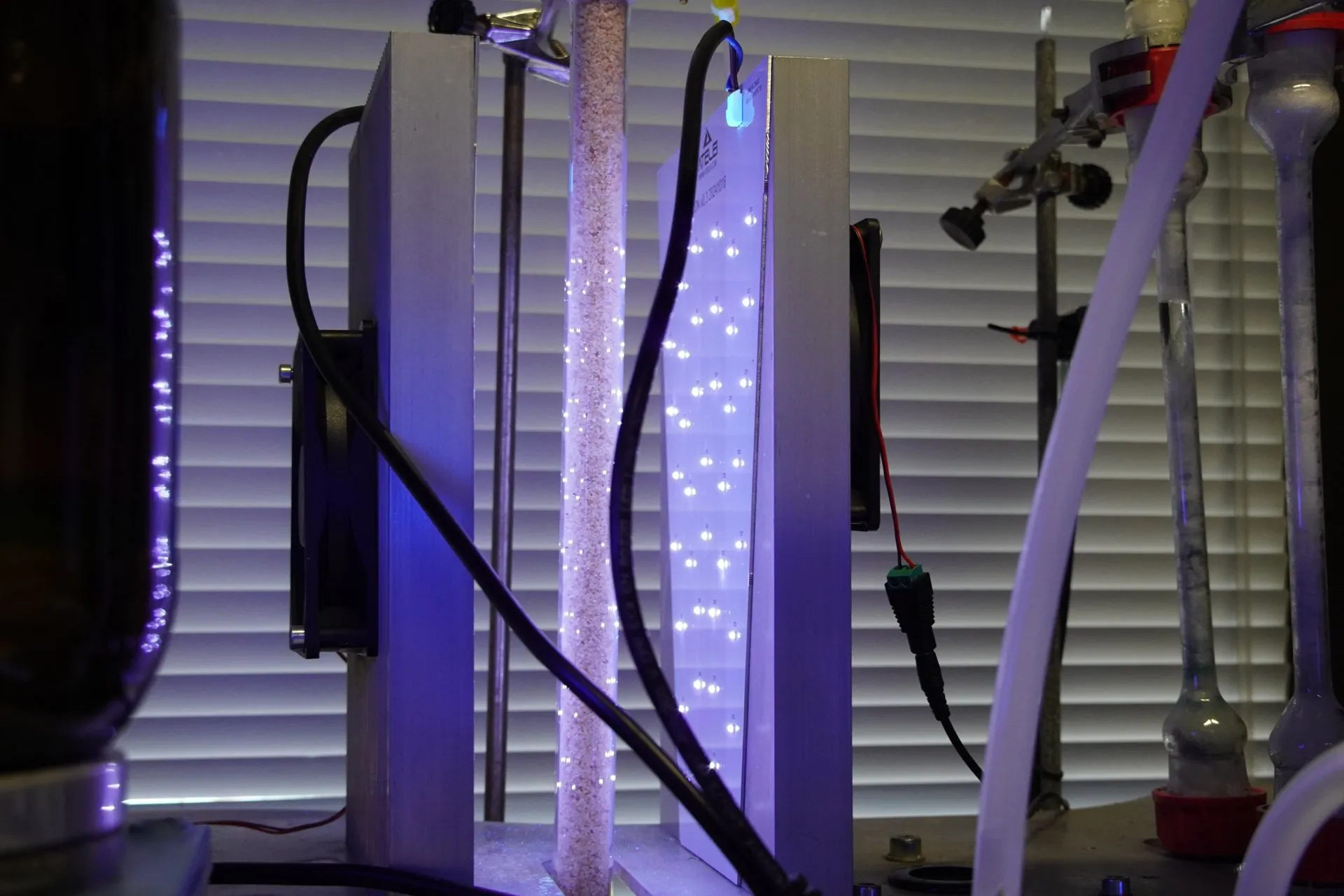
The reactor’s sand column, between the LED panels. Photo courtesy of ITQ (CSIC-UPV).
What they achieved
They tested the system on water from washing polyester garments at home, without adjusting the pH or adding chemicals. Several analytical techniques confirmed that the PET microplastics, the plastic used in bottles and many textile fibres, had disappeared completely.
The same material treated more than 50 litres of water, with a regeneration step between cycles, and no titanium was detected in the treated water. The study is by Carlos Company-Doménech, Alberto Blázquez-Moraleja, Francisco Boscá and María Luisa Marín.
The caveat
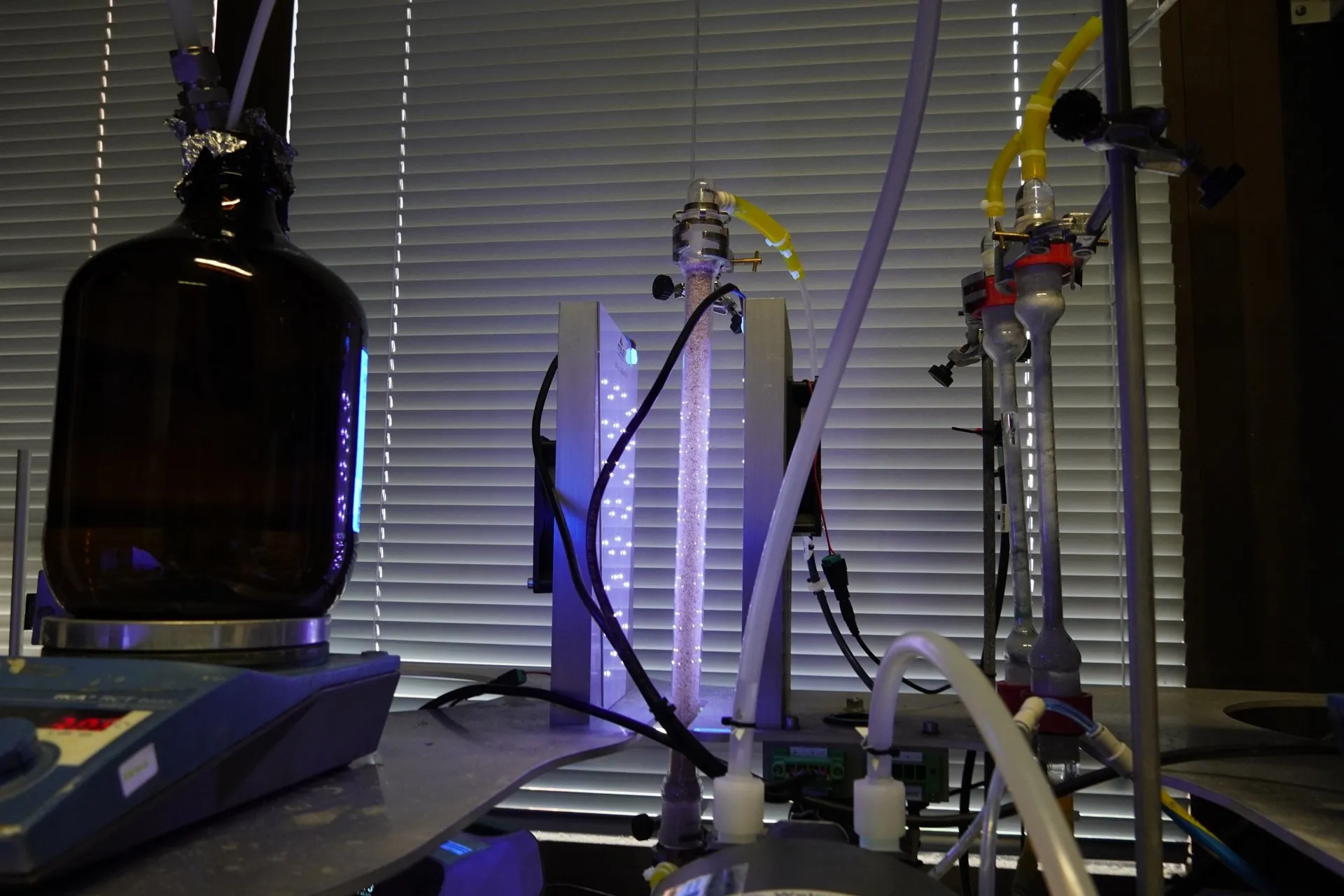
Everything was done at lab scale, with detergent-free washing water, and each treatment takes more than two and a half hours. Performance still needs improving, and it is not yet known whether it can be scaled up. In the medium term, the team sees it as an add-on module for industrial laundries, the textile industry or wastewater plants, and is already studying other microplastics, such as those in the waters of Valencia’s Albufera lagoon.
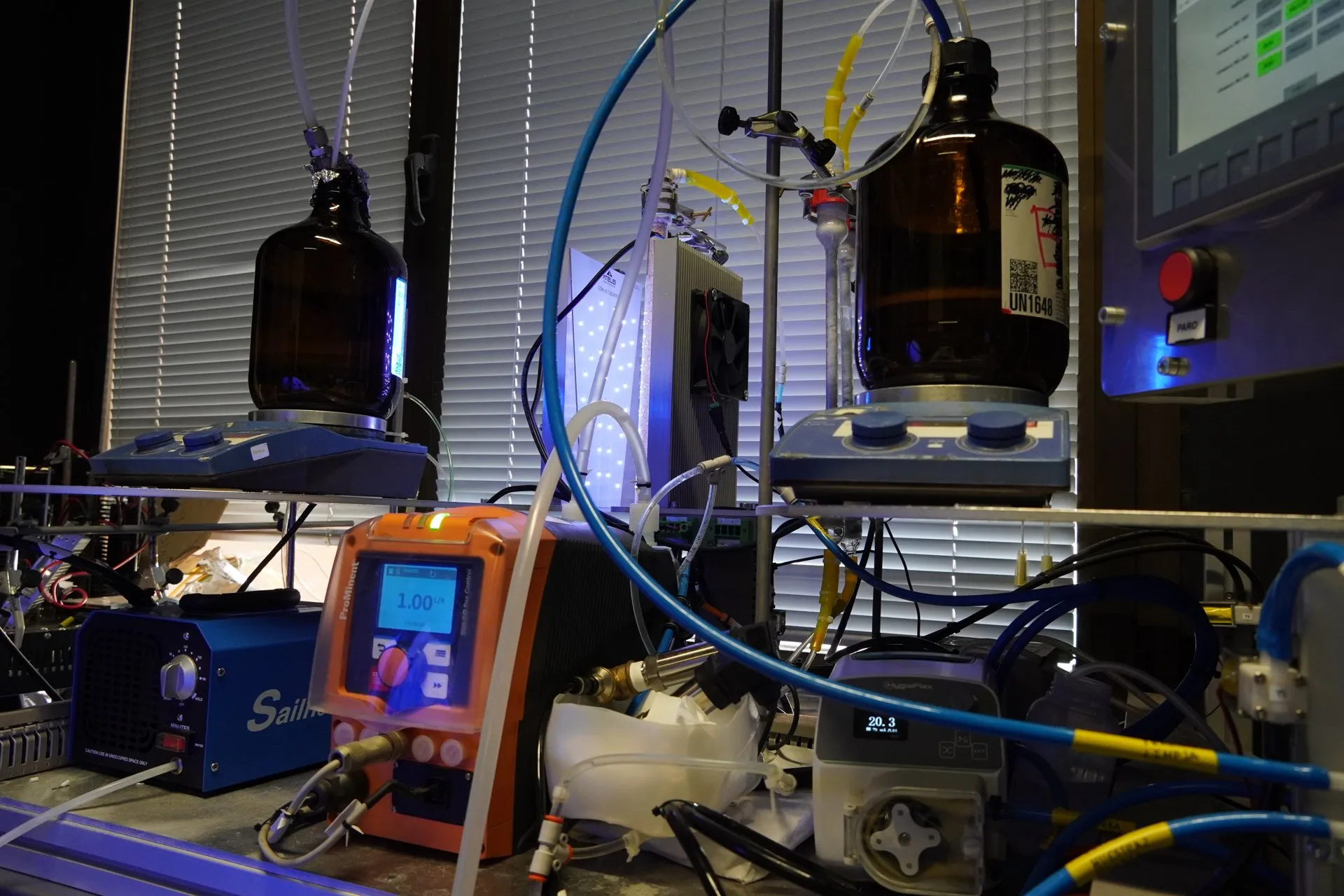
The full set-up in the ITQ lab. Photo courtesy of ITQ (CSIC-UPV).
ITQ kindly shared the photos of the system with us.
Sources
- UPV · Microplastics in water (4-11-2026)
- SINC · Un nuevo sistema elimina por completo los microplásticos que libera la ropa de poliéster en el agua de la lavadora (4-11-2026)
- Chemical Engineering Journal · Scalable continuous-flow photocatalytic system based on a TiO2-coated sand composite for microplastic mineralization, doi:10.1016/j.cej.2026.180838