Two nearly forgotten apple varieties return to Austrian orchards with 2,150 trees
The Ilzer Rosenapfel from Styria and the Falchs Gulderling from Tyrol, two varieties that had become rare, are growing on a 0.7-hectare trial plot. The project, by the supermarket chain SPAR Austria and fruit grower Frutura, is still a trial: more harvests are needed to know whether they work in modern growing.
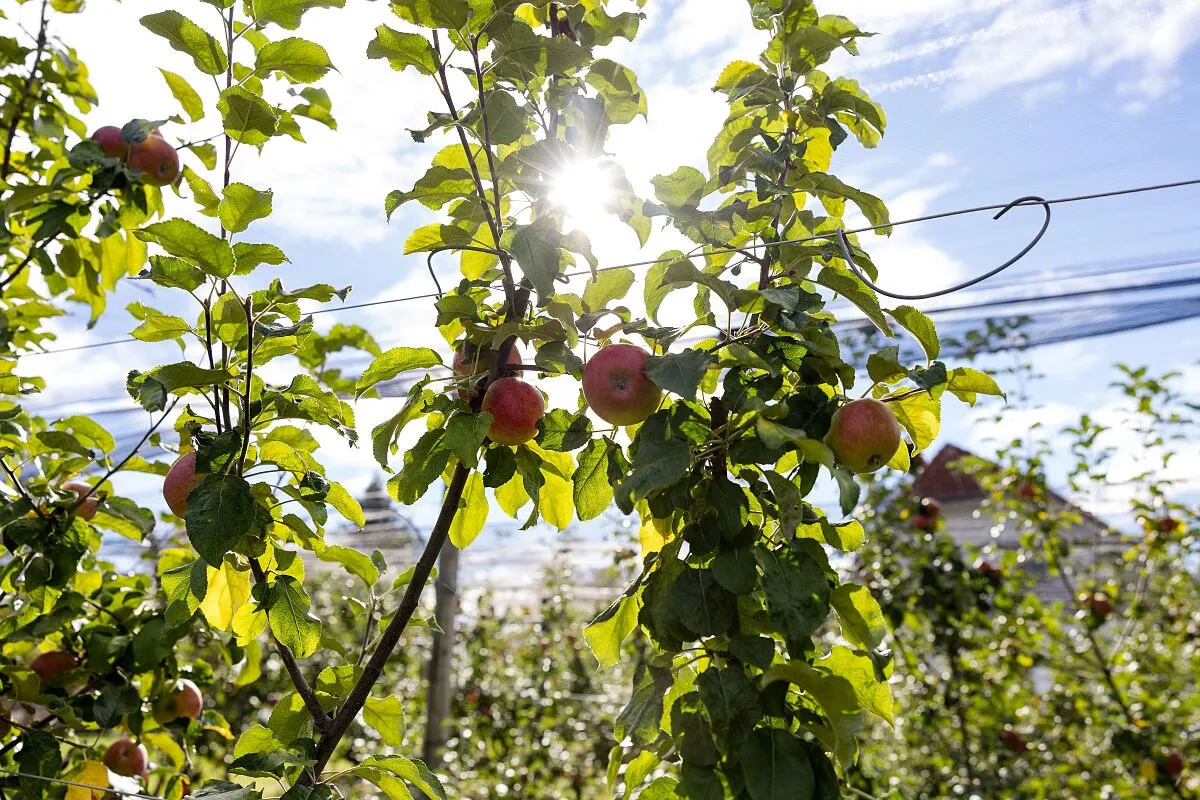
Austria knows of around 2,000 apple varieties, but commercial orchards grow only a small share of them. Two that had become rare, the Ilzer Rosenapfel from Styria and the Falchs Gulderling from Tyrol, are now being planted commercially again: 2,150 trees on a trial plot of about 0.7 hectares in Styria.
The project, run by the supermarket chain SPAR Austria and the Styrian fruit grower Frutura, was presented on 15 October 2026. It is a trial: over the coming years the partners will track tree growth, fruit quality, yields, disease susceptibility and how well the apples store. According to the release, more trial years are needed before drawing firm conclusions.
From a handful of cuttings to more than 2,000 trees
It began in 2023 with a few scions. The Ilzer Rosenapfel cuttings came from Wagersbach, a variety-conservation orchard in Styria; the Falchs Gulderling ones from a collection at the Laimburg research centre in South Tyrol, Italy. By grafting them onto young apple trees, the team built up the stock until it could plant 1,300 trees of the first variety and 850 of the second. The aim is to reach one hectare, with up to 1,500 trees of each.
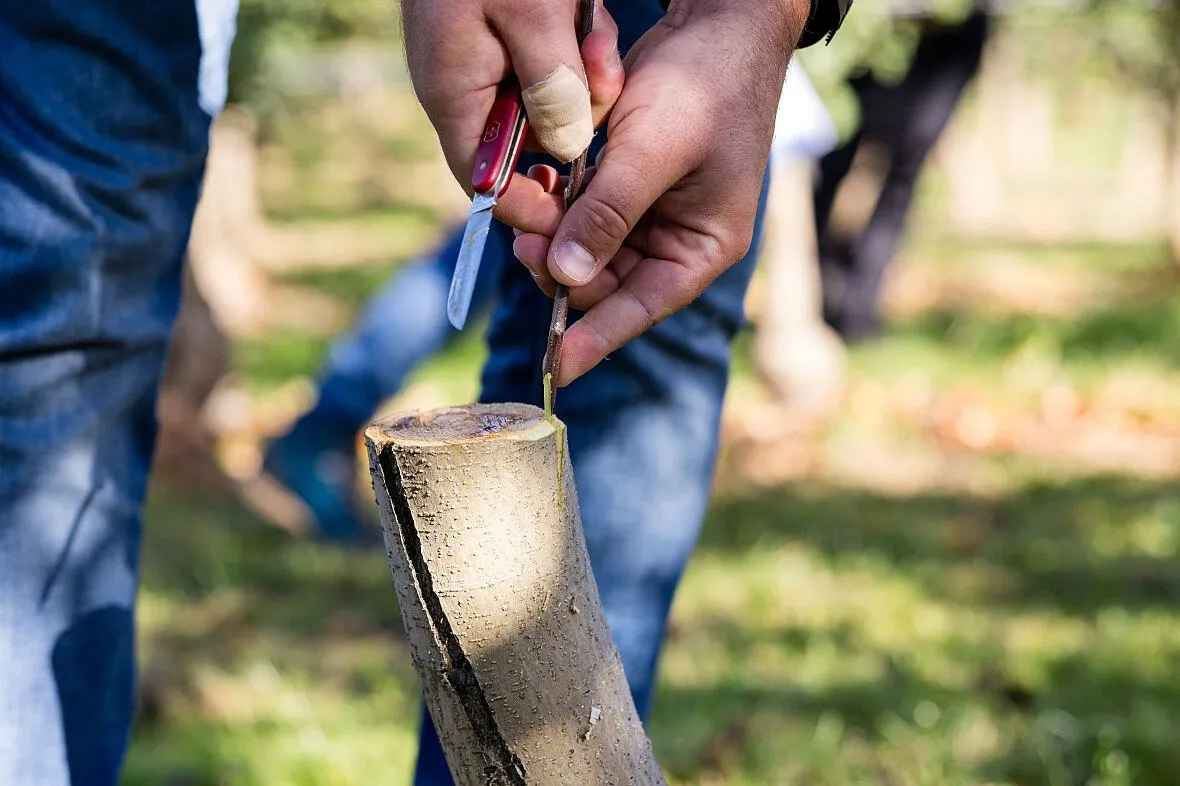
Grafting: a shoot of the old variety is set onto a young apple tree. This is how the project’s trees were multiplied. Photo: © SPAR/wearegiving.
The varieties were chosen with ARCHE NOAH, an Austrian organisation that conserves seed and fruit diversity, and other experts. “Biodiversity lays the foundation for varied, future-proof farming,” says Markus Kaser, deputy CEO of SPAR Austria.
What the first trees show
Early results are modest but positive: the Ilzer Rosenapfel trees are growing strongly, and the Falchs Gulderling has already produced large fruit and its first yields. “Farming lives on the knowledge of past generations as much as on the willingness to try new paths,” say Katrin Hohensinner-Häupl and Manfred Hohensinner, who run Frutura.
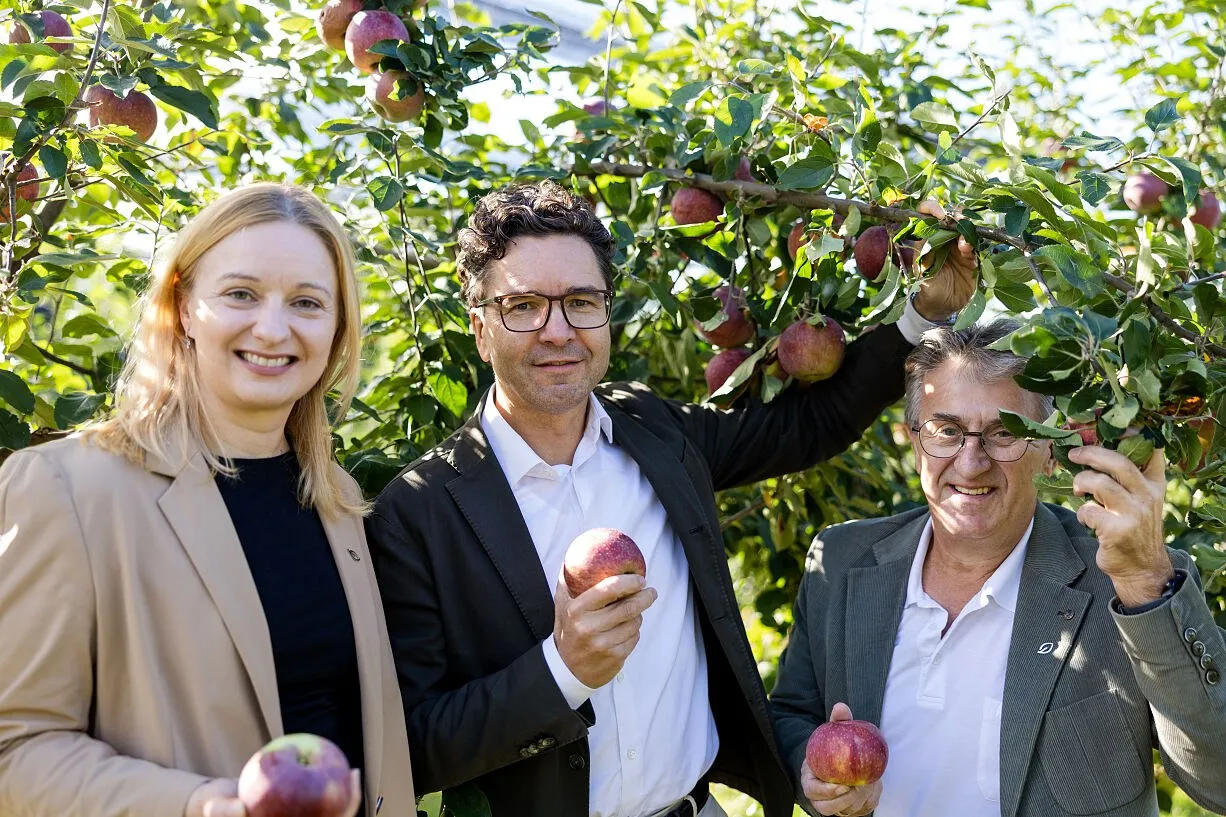
Katrin Hohensinner-Häupl and Manfred Hohensinner of Frutura’s management with Markus Kaser of SPAR Austria on the trial plot. Photo: © SPAR/wearegiving.
Part of this first harvest will go to tastings, lab tests and storage trials, and some to nurseries and schools in Styria. From late November, while stocks last, both varieties will be on sale in a single store in Vienna. If they prove themselves, the plan is to expand planting gradually.
Photos: © SPAR/wearegiving, courtesy of SPAR Österreich.