Swiss chemists turn old acrylic glass back into as-new plastic using half the heat
ETH Zurich researchers break down acrylic glass (Plexiglas) into its building blocks at just over 200°C, with no solvents and one cheap reagent.
Acrylic glass, often sold as Plexiglas, is everywhere: windows, car tail lights, screens and furniture. Most of it ends up as waste. A team at ETH Zurich has found a simpler, cheaper way to turn it back into the stuff it was made from.
How it works
Researchers led by Professor Athina Anastasaki break acrylic glass down into its building blocks (monomers) at just over 200°C, compared with at least 400°C before. The method uses no solvents: a single cheap, off-the-shelf compound is enough to start a reaction that then runs on its own.
As good as new
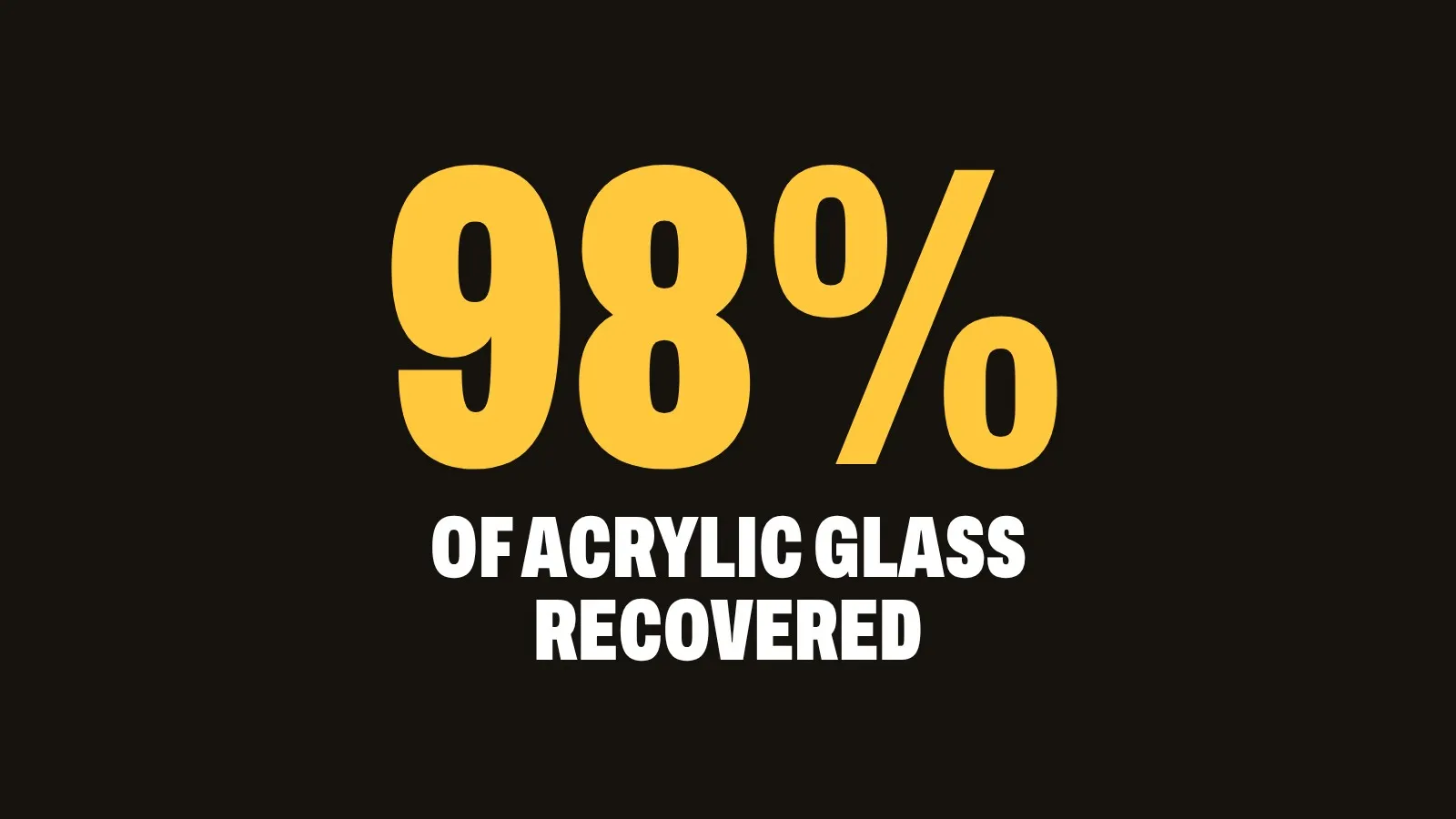
Up to 98% of the material can be recovered, and it comes out very pure even when the old plastic contains dyes or impurities, so it can be made into acrylic glass as good as new. “What makes our new approach so exciting is its simplicity,” says lead author Richard Whitfield.
What’s next
The work, published in Nature Chemistry, is still at lab scale. ETH has filed a patent and is looking for industry partners, and the team now wants to try the same idea on polystyrene.