Personalised mRNA vaccine cuts the risk of melanoma coming back by 42%
In a phase 3 trial of 1,137 patients who had high-risk melanoma removed, adding a personalised mRNA vaccine to immunotherapy kept 82% free of relapse after two years, compared with 70% on immunotherapy alone. The results will be presented on Saturday at the ESMO congress in Madrid.
An mRNA vaccine designed for each patient’s own tumour has passed its biggest test. In the phase 3 INTerpath-001 trial of 1,137 people who had high-risk melanoma surgically removed, adding the vaccine to standard immunotherapy cut the risk of the cancer returning, or of death, by 42% compared with immunotherapy alone. It is the first personalised cancer vaccine to do so in a trial at this stage.
The results will be presented on Saturday 24 October at the Presidential Symposium of the European Society for Medical Oncology (ESMO) congress in Madrid, and will be published in The New England Journal of Medicine.
What was tested
Participants had stage IIB, IIC, III or IV melanoma that had been completely removed but carried a high risk of returning. All received pembrolizumab (Keytruda), the immunotherapy used today after surgery. Two in three also got the vaccine, intismeran autogene, developed by Moderna and Merck (MSD); the rest got a placebo.
Each dose is made for one patient: the DNA of their tumour and of their healthy cells is sequenced, the mutations found only in the cancer are identified, and an mRNA is built with up to 34 of those “flags” (neoantigens). That teaches the immune system to recognise the tumour cells if they try to come back.
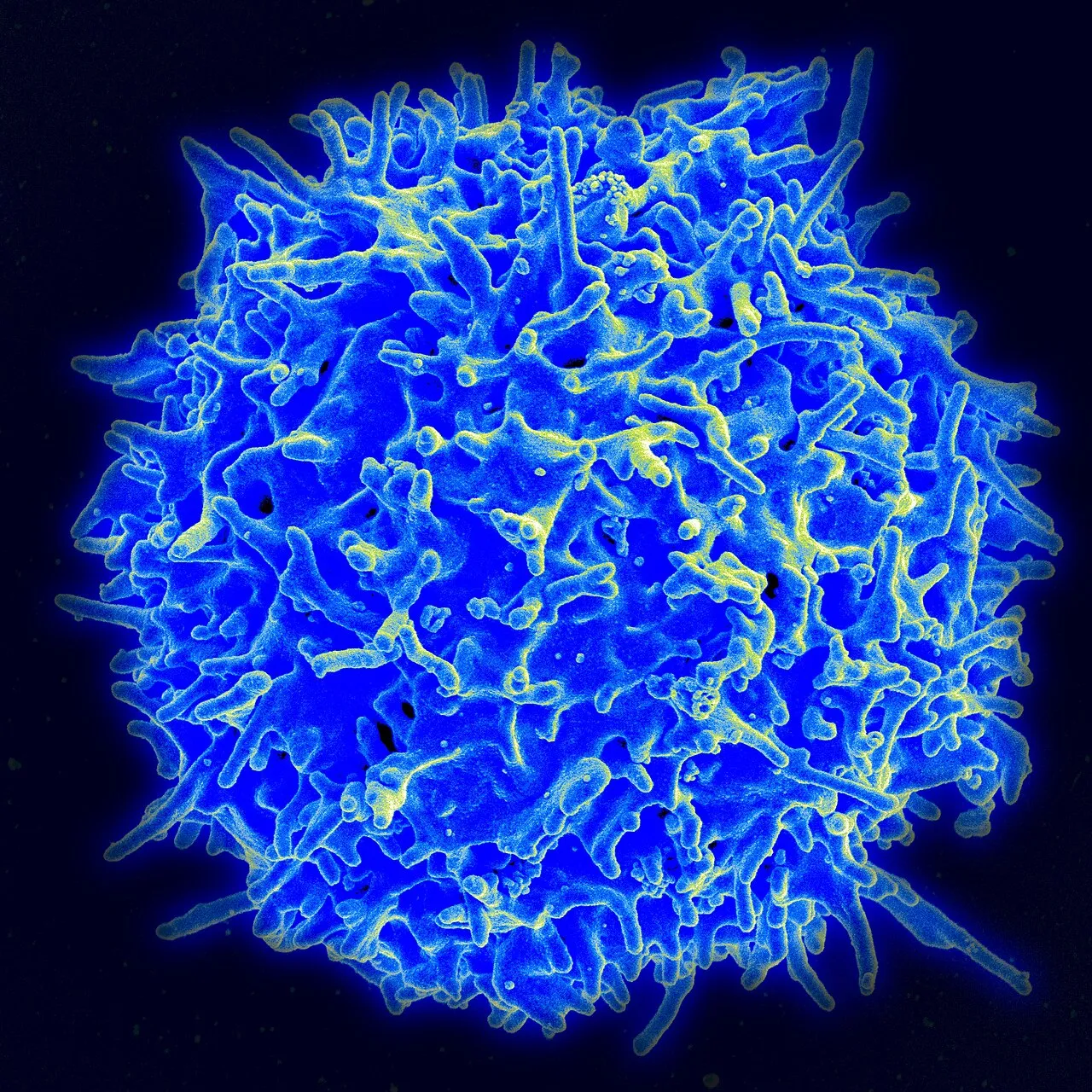
A T cell, the immune cell the vaccine teaches to recognise the tumour. Photo: NIAID (public domain).
The results
- After two years, 82.2% were still relapse-free with the vaccine plus immunotherapy, compared with 70% on immunotherapy alone.
- The risk of the cancer spreading to other organs (distant metastasis), or of death, fell by 38%: 88.5% were free of it at two years, compared with 80.2%.
- From the sixth month on, once patients had received the vaccine, the reduction in relapse risk reached 58%.
The trial’s principal investigator, oncologist Georgina Long of Melanoma Institute Australia and the University of Sydney, said the results could mark “a foundational shift” in how earlier-stage melanoma is treated. Oncologist Janice Mehnert of NYU Langone’s Perlmutter Cancer Center, who was not involved in the study, said it showed “a similar sustained benefit in a much larger sample size, which is very reassuring”.
What to keep in mind
- It is not approved yet. The companies are in talks with regulators; it remains an investigational treatment.
- There was no difference in the first six months. The vaccine takes time to make for each patient, so the benefit shows up later.
- It is not yet known whether it extends life. Overall survival data are immature, although they point the right way.
- Side effects: fever (52%) and injection-site pain (51%) were more common with the vaccine. Serious side effects were similar in both groups (14.2% vs 13.4%) and no new safety concerns emerged.
- The trial was funded by the companies themselves.
It is one of the headline results from Europe’s biggest cancer congress, held this year in Madrid, and it opens the door to testing the same approach in other cancers.
Sources
- Merck and Moderna · Phase 3 INTerpath-001 results for the ESMO 2026 Presidential Symposium (22-10-2026)
- CancerNetwork · Intismeran plus pembrolizumab reduces recurrence risk in resected melanoma (22-10-2026)
- Targeted Oncology · Personalized mRNA vaccine intismeran plus pembro cuts melanoma recurrence (23-10-2026)
- AJMC · Merck, Moderna cancer vaccine cuts melanoma recurrence risk by 42%