The peel, seeds and stalks we throw away hold more fibre than the bits we eat
A King's College London study of 12 common fruits and vegetables found that in 10 of them the parts we usually bin had more fibre than the flesh. Pineapple skin and core had about five times as much; butternut squash skin and seeds, 9.25g per 100g. The catch: everything was measured raw, cooking may change the numbers, and broccoli went the other way, with less fibre in the stalk than in the florets.
Pineapple skin, the tough core left on the chopping board, the seeds scooped out of a squash. They usually end up in the bin, and that is where much of the fibre is. A team at King’s College London measured 12 common fresh fruits and vegetables and found that in 10 of the 12, the parts we throw away had more fibre than the parts we eat.
The study, published on 29 October in the International Journal of Food Sciences and Nutrition, has its limits: everything was tested raw, so cooking may change how much fibre there is and how easy it is to digest. And not everything adds up: broccoli stalks had 28.4% less fibre than the florets.
Five portions of pineapple in the skin and core
The standout figures, according to the publisher Taylor & Francis:
- Pineapple: the skin and core had more than five times the fibre of the flesh. Those from a single pineapple could provide as much fibre as five portions of the fruit.
- Butternut squash: skin and seeds, 9.25g of fibre per 100g.
- Watermelon: the rind, 2.10g per 100g, roughly a slice of wholemeal bread.
These parts make up between 25% and 48% of each food’s weight.
A menu made from leftovers
Fibre is a weak spot in British diets: only 4% of adults reach the recommended 30g a day, and the average is 16.4g. The UK also wastes around 10 million tonnes of food a year, and more than a third of it is fresh fruit and veg.
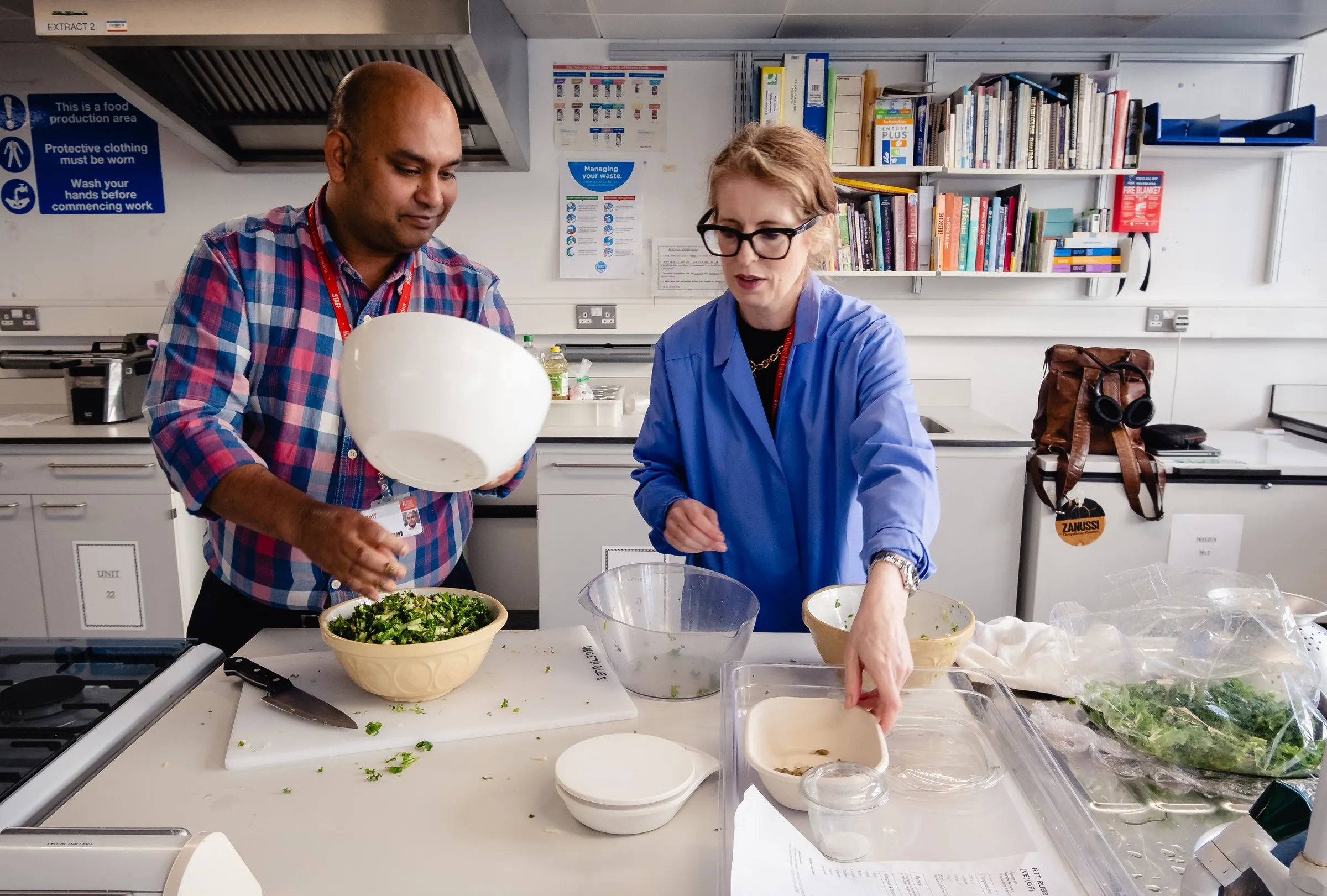
So the team, led by Dr Rachel Gibson, took the idea to the kitchen. King’s Food, the university’s catering service, launched a “root-to-tip” menu after testing it with 40 staff and students. Fibre persuaded them more than the environmental argument did.
Gibson suggests starting small: leave the skin on kiwis, add broccoli stalks to a stir-fry, keep the seeds in peppers. “It isn’t about perfection,” she says. Her colleague Dr Balazs Bajka adds that no one expects people to eat 100g of squash skin; the point is a wider variety of fibre sources.