Argentine AI that spots diabetic eye disease wins Balseiro Institute's top prize
Retinar, a platform built at the PLADEMA Institute of UNICEN university in Tandil with El Cruce Hospital, uses artificial intelligence to check photos of the back of the eye for early signs of diabetic retinopathy. On 30 October it won first prize, worth US$30,000, in the Balseiro Institute's IB50K competition. It is already used in three public hospitals in Buenos Aires province with more than 500 patients, but it is still being rolled out.
Marta is 58, has diabetes and runs a small grocery shop in a village. Her diabetes doctor recommends an eye check, but she cannot travel. Then one day her sight starts to fail. That was the case José Ignacio Orlando described when he presented Retinar at the final of IB50K, the Balseiro Institute’s competition for technology business plans, according to the Argentine outlet Periferia.
On 30 October, in Bariloche, Retinar took first prize, worth US$30,000. The platform is already working in public hospitals but is still being rolled out: according to the Balseiro Institute, its models have been validated on more than 61,000 images and are in use with more than 500 patients.
One eye photo, one remote report
Diabetic retinopathy is the leading cause of preventable and irreversible vision loss in working-age adults, CONICET, Argentina’s national research council, points out. It can be stopped if caught early, but according to Orlando only 30% of people with diabetes get an eye check. “There are few ophthalmologists and they are badly distributed,” he told Periferia.
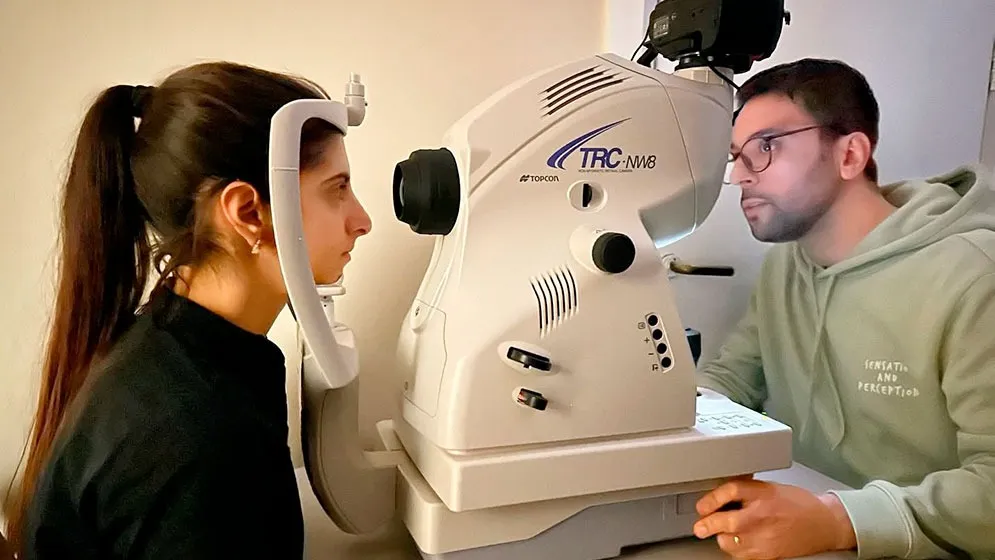
With Retinar, a technician photographs the back of the eye with a fundus camera and uploads the image. One algorithm checks whether the photo is good enough and another looks for signs of retinopathy. An ophthalmologist then reviews the case remotely and writes the report. The tool does not diagnose on its own: it sorts and prioritises cases, according to CONICET.
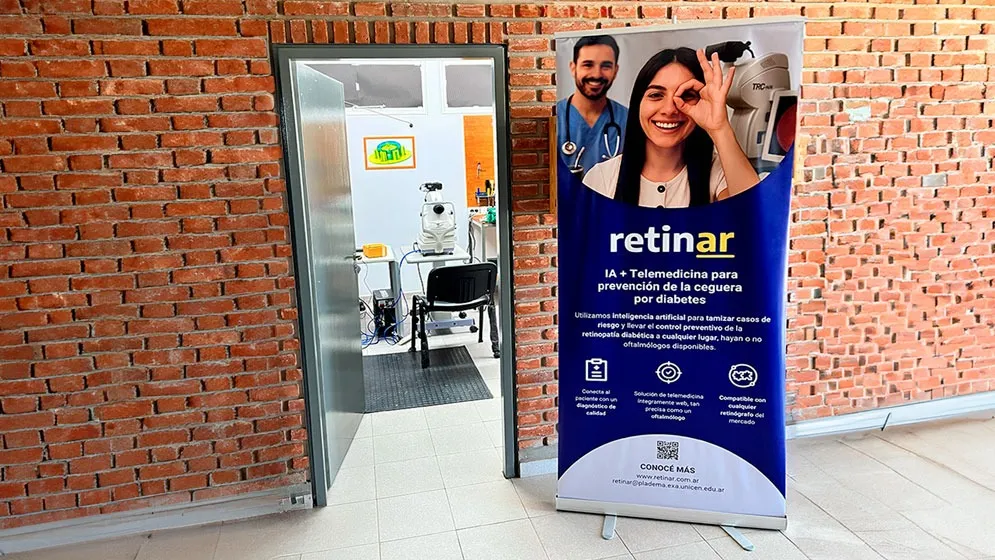
Retinar describes itself as a tele-ophthalmology platform for early detection of diabetic retinopathy. Photo: courtesy of the researcher / CONICET (CC BY 2.5 AR).
From Tandil to Florencio Varela
The idea came from a collaboration with El Cruce Hospital in Florencio Varela, where staff saw that many people with diabetes had little access to eye checks. The team includes Orlando, a CONICET researcher at UNICEN’s PLADEMA Institute, researcher Ignacio Larrabide and doctoral fellows Lucas Telesco and Franco Arellano, working with ophthalmologists such as Mercedes Leguía at El Cruce.
It is now used at El Cruce, at the Julieta Lanteri Hospital in Tandil and at the Irurzun Hospital in Necochea. In Tandil, 269 patients were screened and 25.7% had signs of retinopathy that needed referral, CONICET reported in July. At the final, Orlando spoke of 1,000 patients with an AI pre-diagnosis: “25% had signs of diabetic retinopathy and didn’t know it.”
The team’s goal, according to Periferia, is to reach 1.3 million patients a year by 2030.
Sources
- Instituto Balseiro · First prize of IB50K 2026 goes to a project that detects an eye disease in people with diabetes (30-10-2026, in Spanish)
- CONICET · Retinar, the artificial intelligence developed by CONICET researchers to prevent vision loss in people with diabetes (31-07-2026, in Spanish)
- Periferia · An app to prevent diabetes-related blindness wins the Balseiro's first prize (01-11-2026, in Spanish)
- ANBariloche · Retinar wins first prize at IB50K 2026 (31-10-2026, in Spanish)