Angola takes four vaccines at once to more than 10 million children
From 23 to 27 October, more than 11,000 teams of 77,000 health workers, volunteers and community leaders fanned out across every province of Angola to vaccinate against polio, measles, rubella and yellow fever. The goal was to reach more than 10 million children; the final number vaccinated has not yet been published.
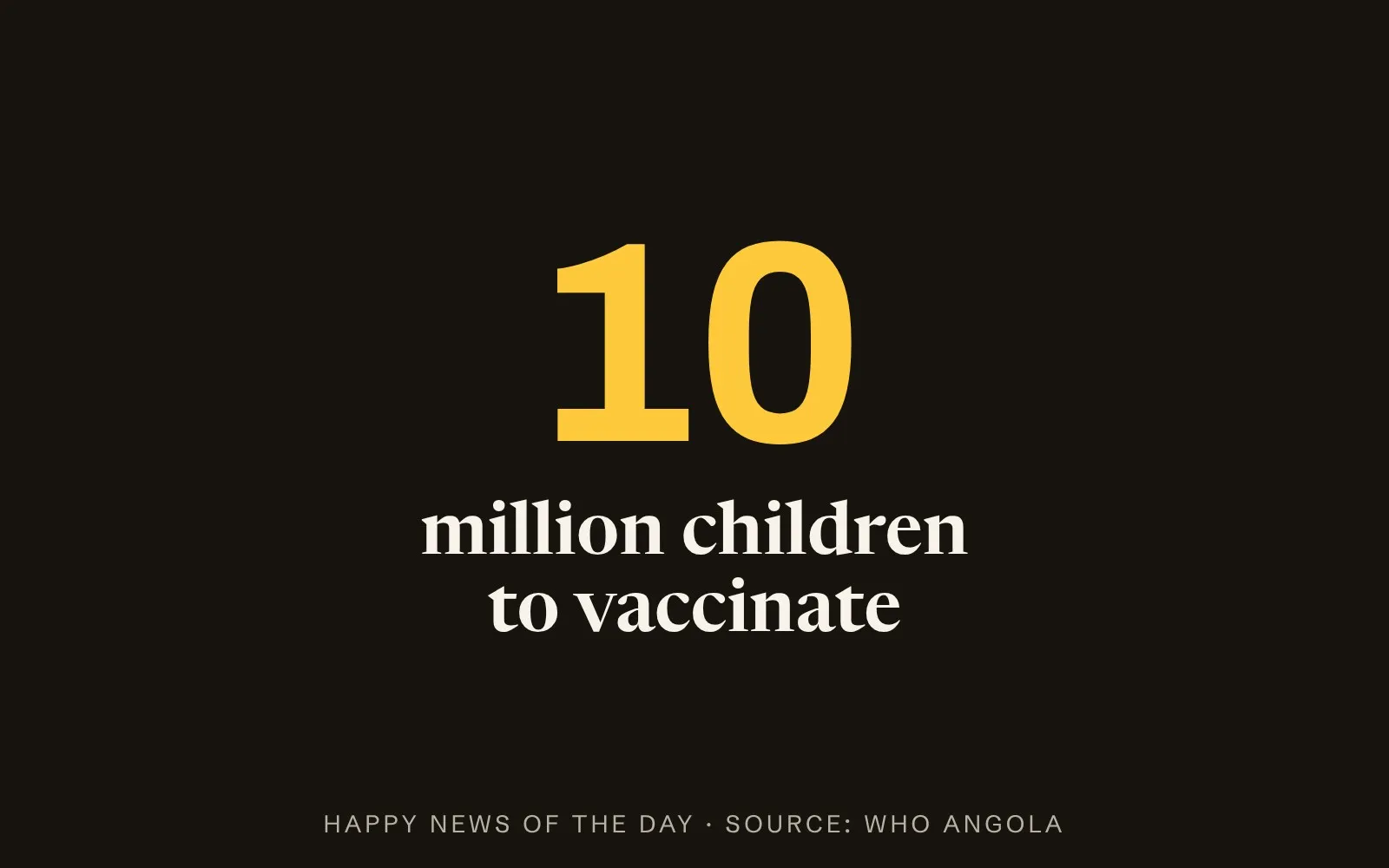
On 23 October, eleven thousand vaccination teams set out through the neighbourhoods, villages and back roads of every province in Angola. For five days, until the 27th, they carried four vaccines at once, against polio, measles, rubella and yellow fever, with one target: more than 10 million children. According to the World Health Organization (WHO), it is one of the largest public health operations ever carried out in the country.
The caveat: that figure is the goal. The Angolan government and WHO have not yet published how many children were vaccinated in the end.
77,000 people on the ground
Angola’s Vice President, Esperança da Costa, launched the campaign in Luanda. More than 77,000 health workers, volunteers, social mobilisers and community leaders took part, in cities as well as rural and hard-to-reach areas. In provinces bordering the Democratic Republic of the Congo and Namibia, the injectable polio vaccine was added, in coordination with similar campaigns in those two countries to protect people living along the border.
The campaign is led by the Ministry of Health, with support from WHO, UNICEF, Gavi and the Global Polio Eradication Initiative. The vaccines are paid for from the state budget, according to Health Minister Sílvia Lutucuta.
From five vaccines to thirteen
Angola’s childhood schedule has grown from five vaccines in 1979 to thirteen in 2026. The number of health facilities with a cold chain has also risen sharply, partly thanks to solar-powered equipment installed in remote areas, which brings vaccines to children in the hardest-to-reach places.
The children who were never vaccinated
WHO’s Representative in Angola, Indrajit Hazarika, wrote that the campaign’s success will be measured not only by the number of doses, but by whether it reaches so-called “zero-dose children”, those who have never had a single vaccine. The Vice President made the same point at the launch: protecting children “does not end with a single campaign”, and routine vaccination has to be kept up.
The next step is the campaign’s final tally, due from the Ministry of Health and WHO.