823 Spanish students intern in villages, and six in ten now picture careers there
The fifth edition of Spain's Campus Rural programme placed 823 students from 45 public universities in paid internships across 499 rural municipalities, 25% more participants than in 2025. In the ministry's follow-up of last year's interns, 63.6% said they are considering a career in rural areas; the ministry has not published how many students answered.
On 12 August, at the astronomical observatory in Borobia, a village in Soria, three maths and physics students from the universities of La Rioja, the Basque Country and Zaragoza were getting ready for the total solar eclipse with local residents. The town hall had given them somewhere to stay. They were there with Campus Rural, a programme that sends university students to do internships in small villages, which has just closed its fifth edition.
According to Spain’s Ministry for the Ecological Transition and the Demographic Challenge (MITECO), 823 students from 45 public universities took part this year, out of 850 places on offer. That is 25% more than in 2025, when there were 657. They worked in 499 municipalities, up from 402 the year before, with 544 host organisations: town halls, groups of municipalities, local action groups, businesses, associations and foundations. Since 2022, 3,025 students have been through the programme.
Internships last between two and five months and pay €1,000 a month before tax, with social security cover, according to desdeSoria. The programme is run by MITECO, the Ministry of Science, Innovation and Universities, the CRUE rectors’ conference and the universities themselves.
What last year’s interns say
The ministry asked students from the 2025 edition what had stayed with them. 63.6% say they are considering a career in rural areas, 39.8% still have some professional link with their host organisation and 28.4% found a job opportunity through the programme. MITECO has not said how many students answered the survey, so the figures are a guide rather than a firm result.
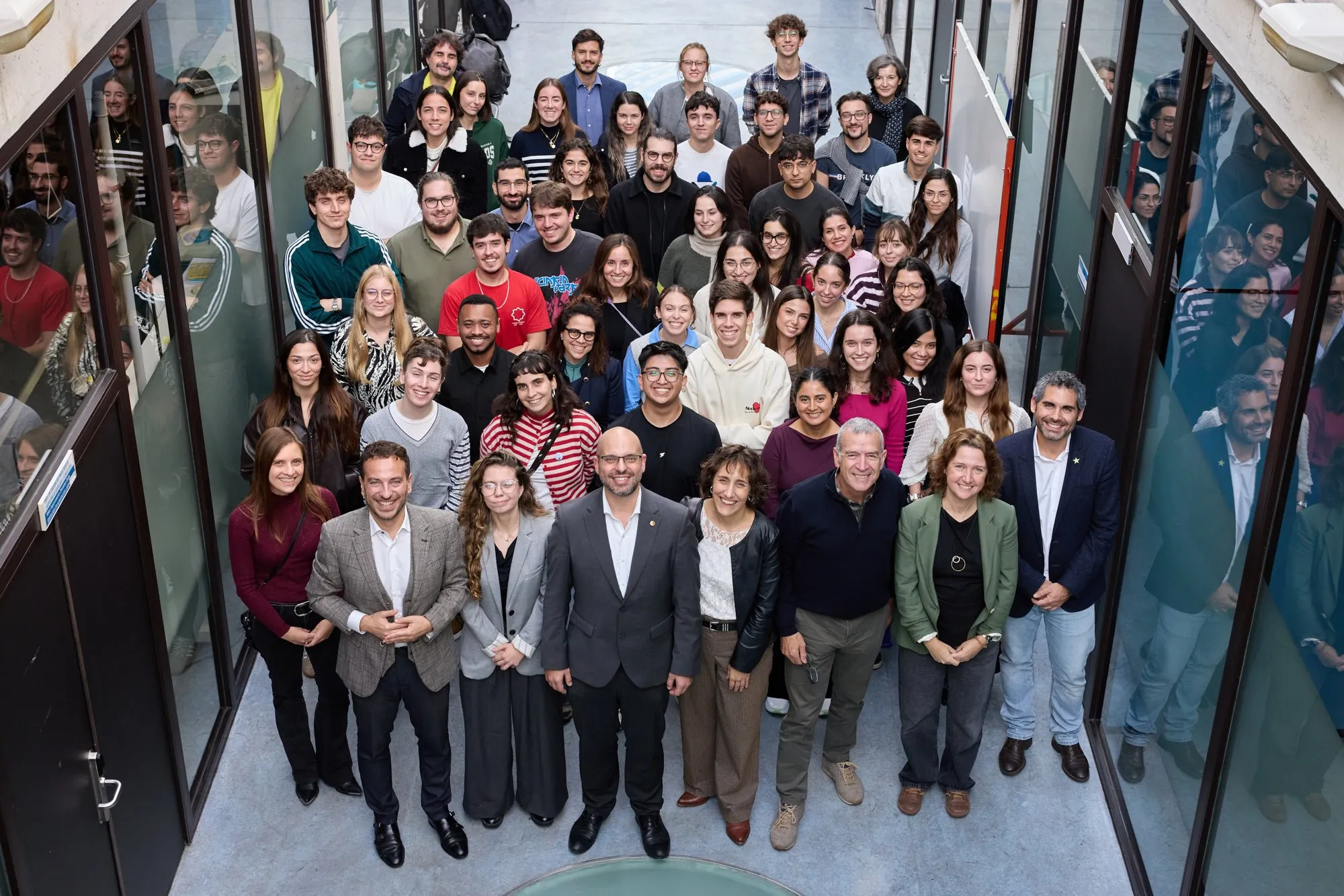
The results were presented at the programme’s annual meeting, held this week at the Public University of Navarre. It was opened by Paco Boya, Secretary General for the Demographic Challenge; Javier Goicoechea, vice-rector for teaching at the university; Raúl Ruiz, vice-rector at the University of Alicante, representing CRUE; and Lucía Íñigo, of the national coordinating body of public university student representatives. Jon Fernández, a former Campus Rural intern who now works at Navarre’s Territorial Innovation Centre, also spoke.
From a Soria village to Cádiz
In Castillejo de Robledo, in Soria, which joined for the first time this year, six students of architecture, history, journalism and forestry engineering spent two months working in the village. The University of Cádiz also signed up, so the programme now includes 45 of Spain’s 50 public universities.
The aim, the ministry says, is for young people’s link with rural areas to last “beyond the internship”. The next call for places will be published by MITECO and the participating universities.
Sources
- MITECO · Ministry brings together universities and students to assess the impact of Campus Rural (19-11-2026, in Spanish)
- Europa Press (Infobae) · 28.4% of 2025 Campus Rural respondents found a job opportunity through the programme (19-11-2026, in Spanish)
- desdeSoria · Campus Rural closes its fifth edition with around fifteen students on rural projects in Soria (19-11-2026, in Spanish)
- MITECO press office · photo shared with Happy News of the Day (email, 23-11-2026)