New box jellyfish just millimetres long discovered off Alicante
Researchers at the University of Alicante and the Oceanogràfic in Valencia have described Copula lucentia, a tiny box jellyfish found in shallow water off El Campello, Spain. It is only the second species of its kind recorded in the Mediterranean. Its life cycle and the strength of its sting are still unknown, although it is not dangerous to people.
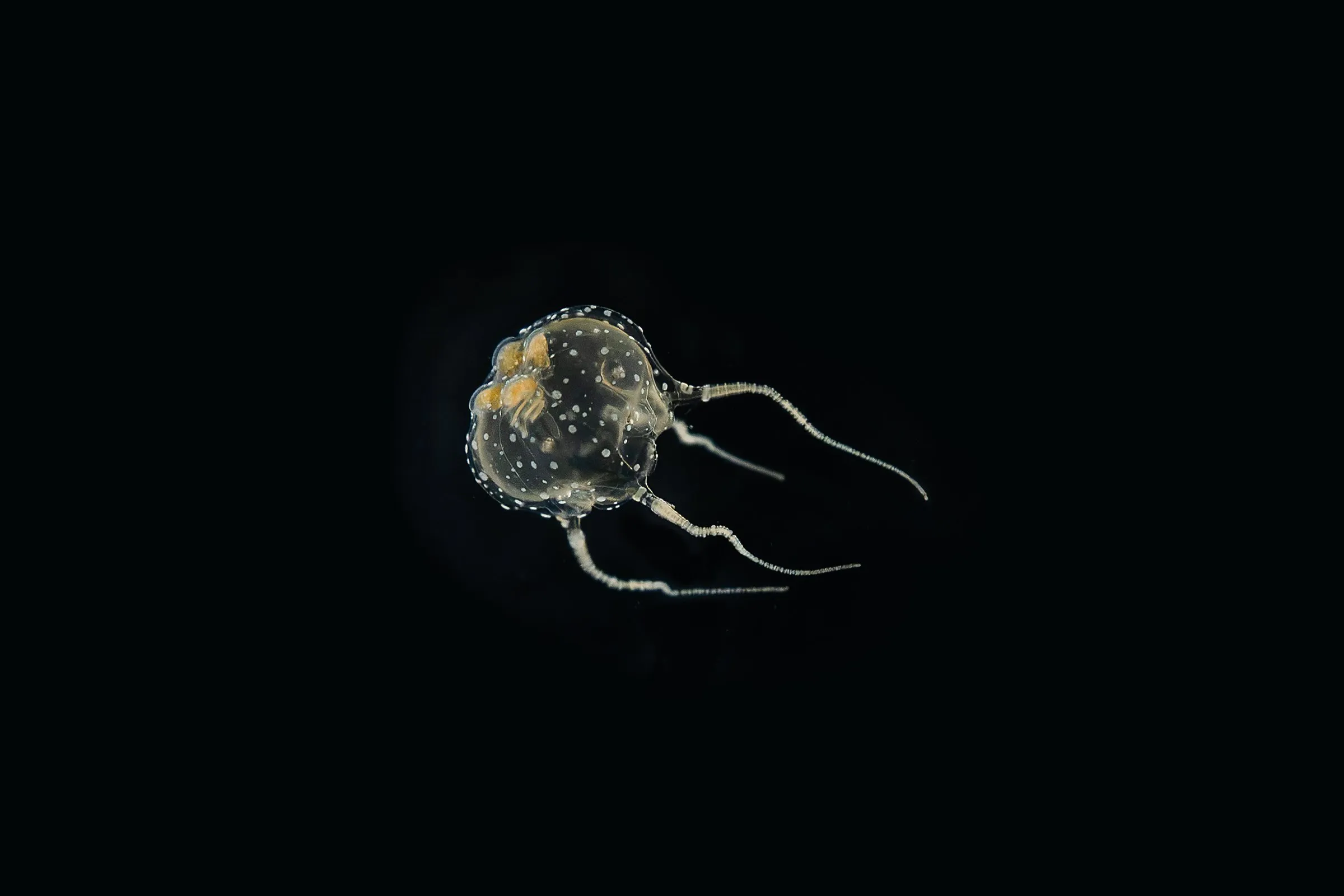
It measures just a few millimetres. Copula lucentia is a box jellyfish new to science, described by a University of Alicante team from specimens collected at night at Illeta dels Banyets, in El Campello. Nobody yet knows what its life cycle looks like or how much it stings. No stings were seen during sampling and none in the area have been blamed on it, although the study does not rule out venom. Now, for the first time, specimens are being kept in an aquarium: the MedusaLab at the Oceanogràfic in Valencia.
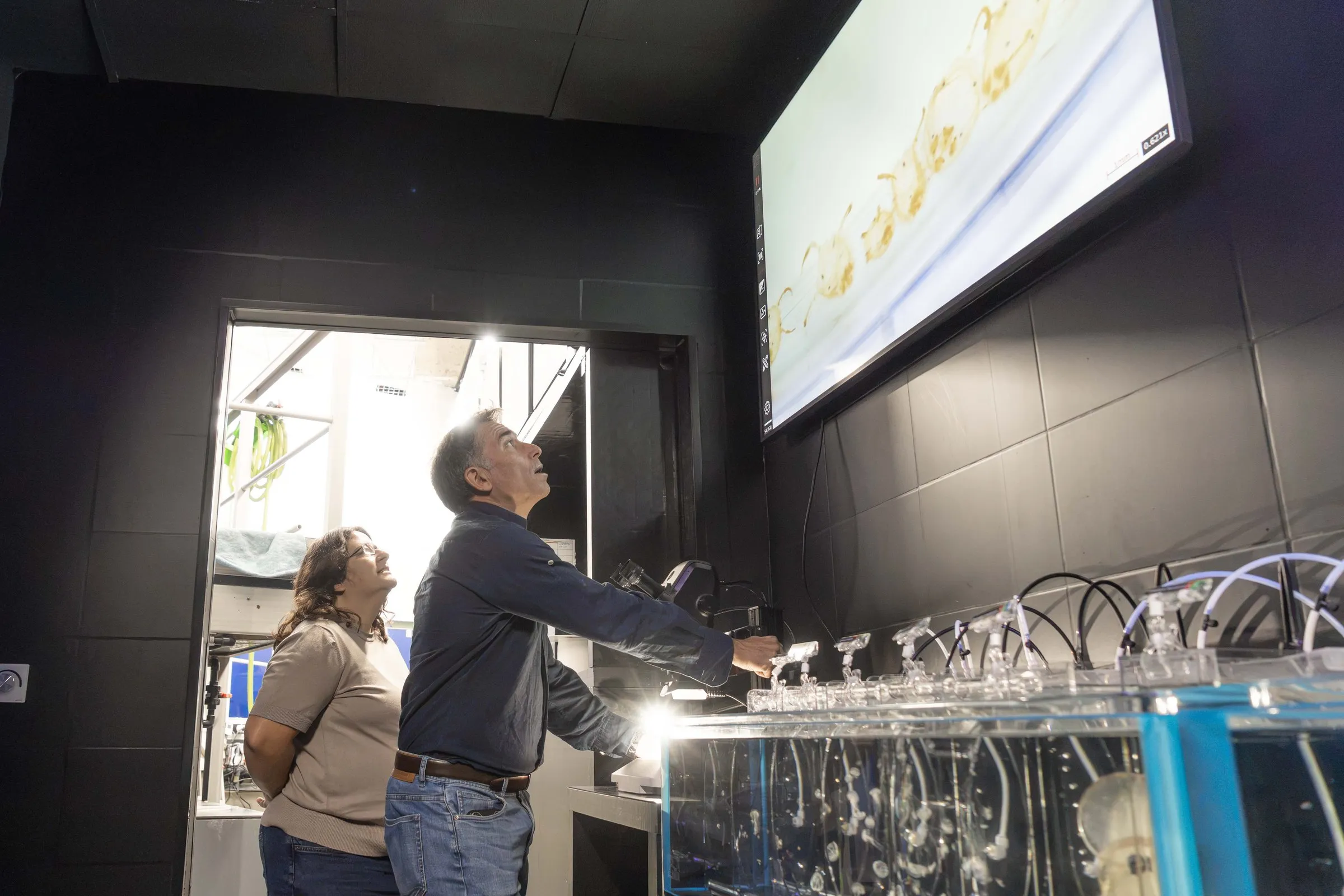
Eva Fonfría and César Bordehore observe Copula lucentia at the Oceanogràfic in Valencia. Photo: University of Alicante.
Only the second of its kind in the Mediterranean
Box jellyfish have cube-shaped bodies and are best known for a few highly venomous Australian species. The Mediterranean had just one, Carybdea marsupialis, described by Linnaeus in 1758. Copula lucentia is the second.
Eva Fonfría and César Bordehore, of the University of Alicante’s Marine Biology Laboratory in Dénia, wrote the study with researchers from other countries. They measured 239 specimens caught in 21 night-time surveys between 2016 and 2018: the largest are about 7 millimetres across. The study was published in 2024 in the journal Marine Biodiversity.
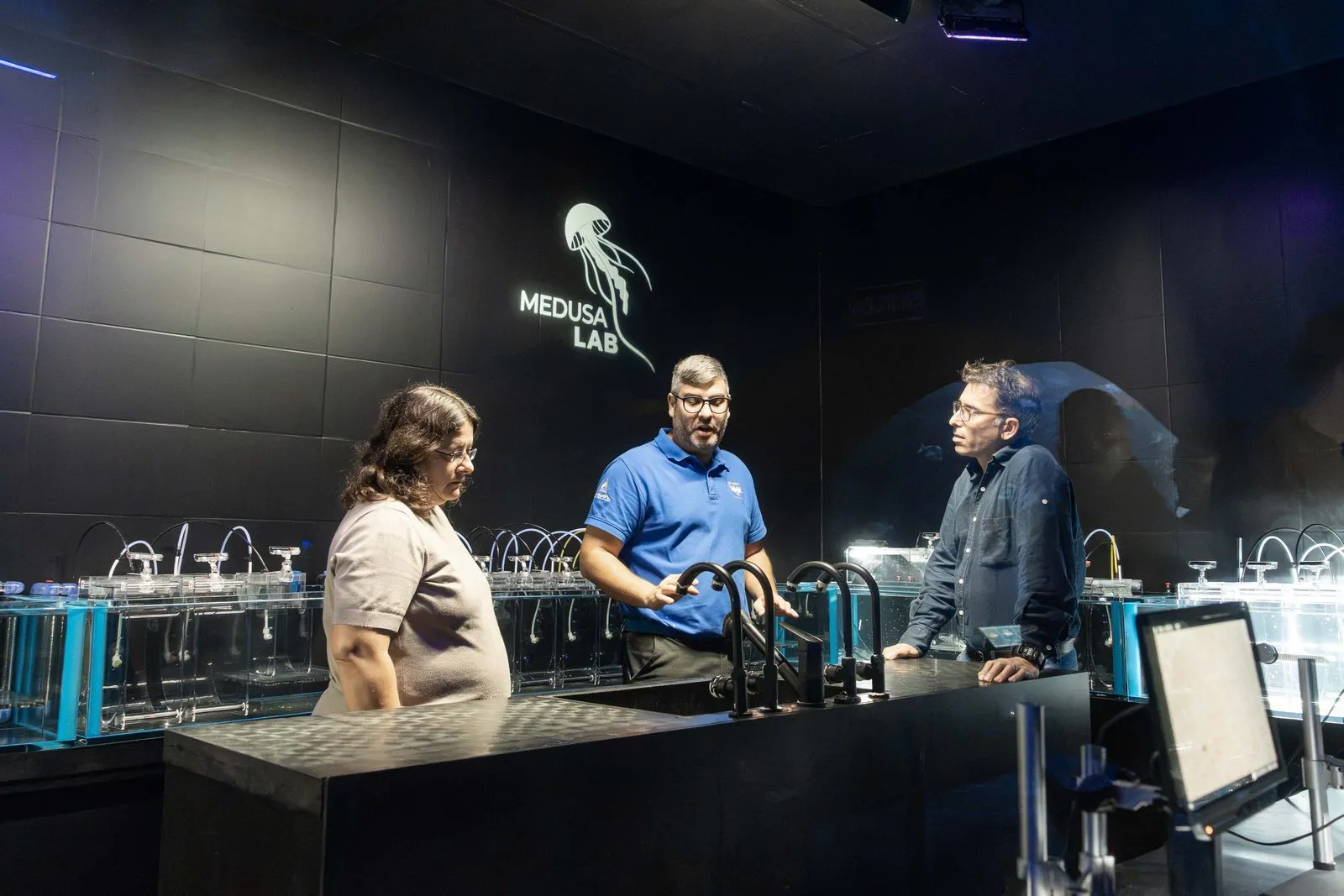
Eva Fonfría, Miguel Candelas and César Bordehore at the Oceanogràfic’s MedusaLab in Valencia. Photo: University of Alicante.
A bird’s beak, not a paw
Its closest relative is Copula sivickisi, from the Indo-Pacific. To tell them apart, the team tracked down that species’ reference specimen, which had been missing for almost 60 years. The difference lies in small canals at the edge of the bell: in the Alicante jellyfish they look like a bird’s beak; in its relative, like a paw. DNA tests confirm it is a separate species and suggest more species in the genus are still waiting to be described.
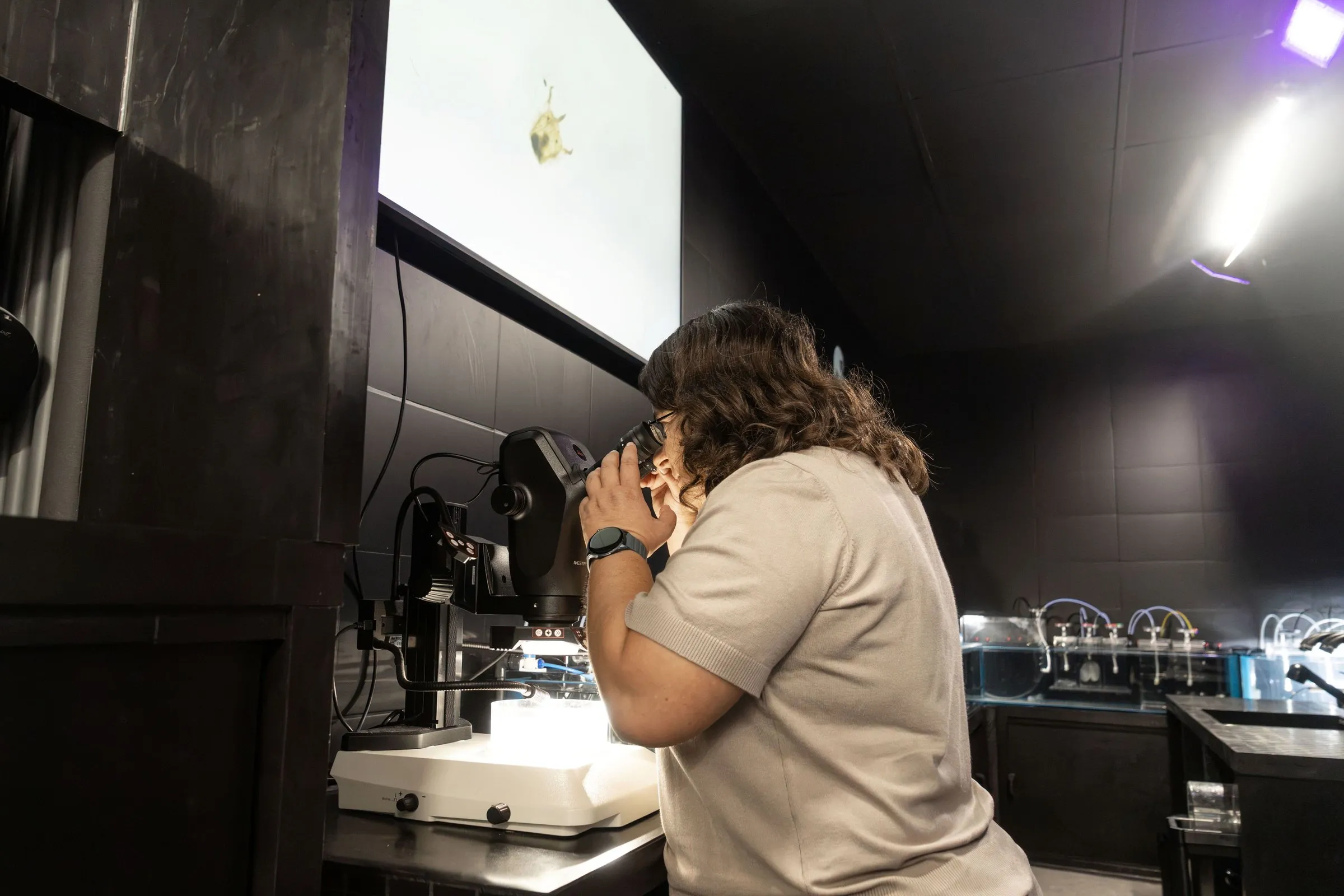
Eva Fonfría, a University of Alicante researcher and the study’s first author, examines a specimen under the microscope. Photo: University of Alicante.
The study was published in Marine Biodiversity. What remains to be worked out is its life cycle and the strength of its sting.