Nepal tests artificial scent marks to keep tigers and leopards away from villages
In the Khata Corridor, which links Bardia National Park with India, Cornell University, WWF Nepal and forest authorities have tested ten compounds that mimic big cats' scent marks. Three were linked to fewer leopard visits and two to fewer tiger visits, Mongabay reports. The trial is only part-way through: some scents drew tigers in, and it is not yet proven that they prevent attacks on livestock.
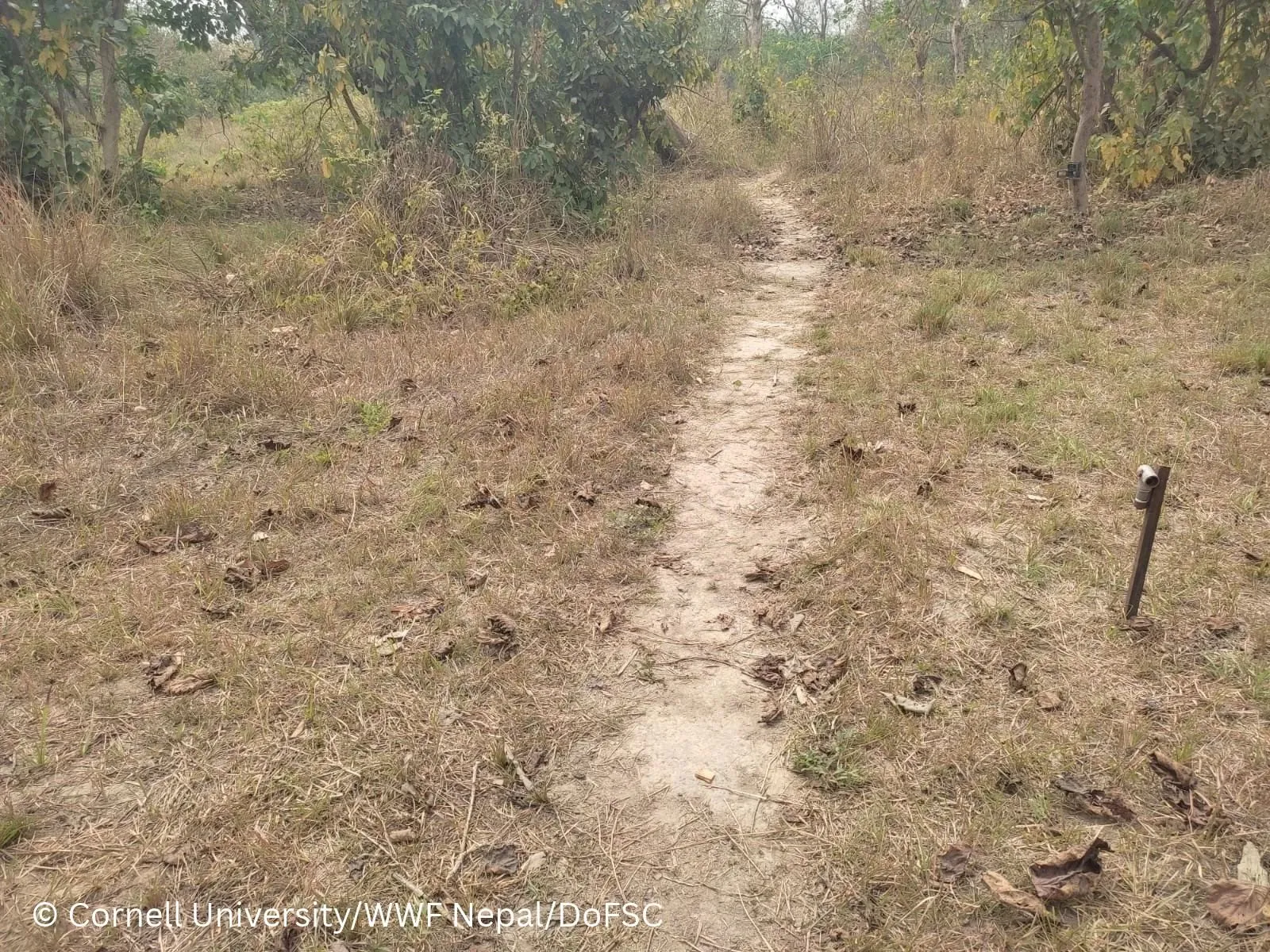
An iron stake beside a forest trail, a dispenser releasing millionths of a gram of scent an hour, and a camera recording whatever comes by. In the Khata Corridor in western Nepal, a team from Cornell University, WWF Nepal and Nepal’s forest authorities has set up 30 stations like this to find out whether a smell can work as a fence.
The idea is to mimic the marks big cats leave to tell others a territory is taken. Early results, reported by Mongabay on 30 October, are encouraging but mixed: of ten compounds tested since October 2024, three were linked to fewer leopard visits and two to fewer tiger visits. Others had the opposite effect. “Tigers became more interested and visited the sites more often,” Shashank Poudel of WWF Nepal told Mongabay.
A smell instead of a fence
The Khata Corridor links Bardia National Park with India’s Katarniaghat Wildlife Sanctuary, and tigers and leopards move through it, sometimes close to homes and livestock. According to The Kathmandu Post, wild animals had killed 11 people in Bardiya district since mid-July 2025, eight of them in leopard attacks.
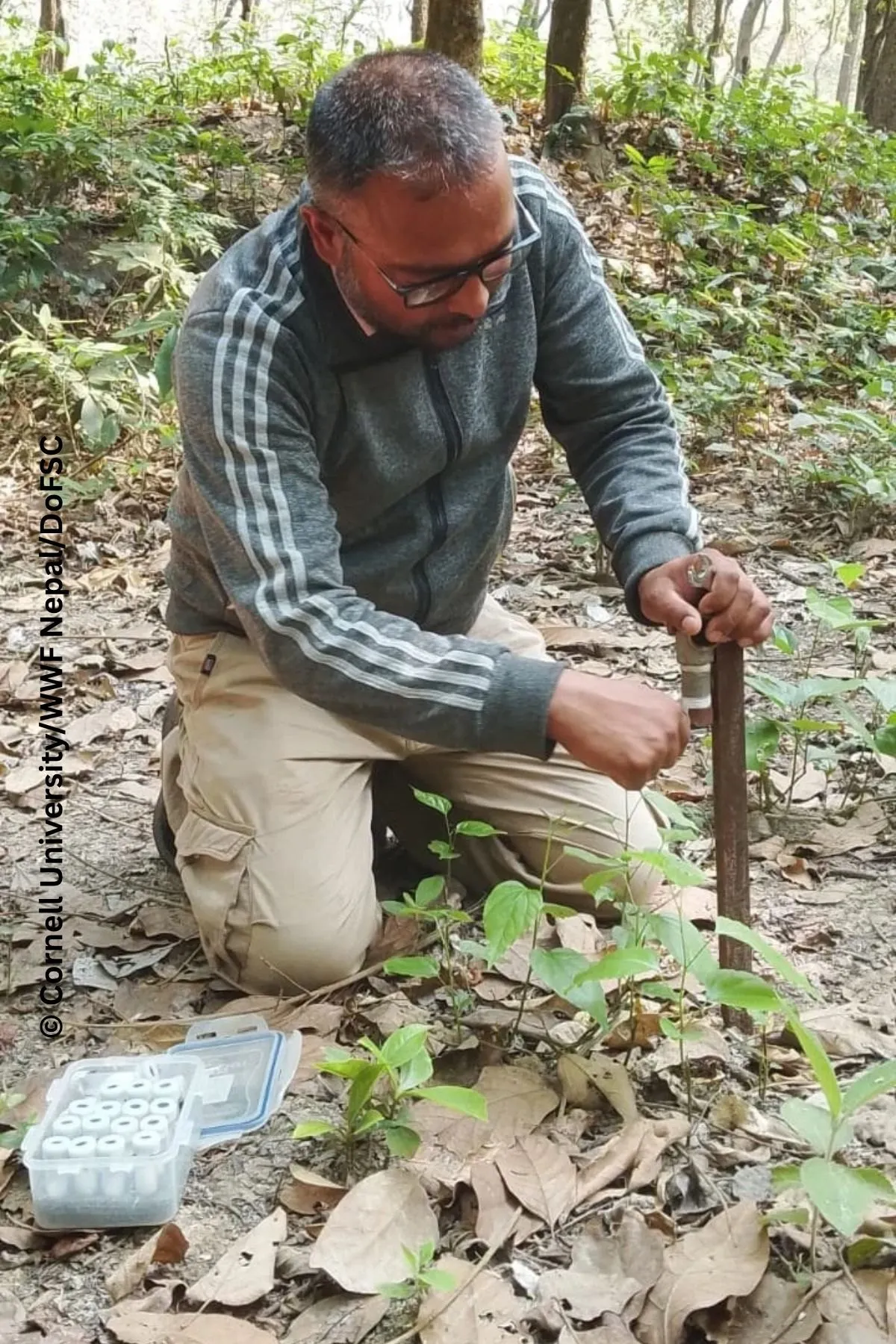
A team member installs a scent dispenser in the Khata Corridor. Photo kindly provided by WWF Nepal. © Cornell University/WWF Nepal/DoFSC.
The method comes from Botswana, where chemical engineer Peter Apps identified compounds in leopard urine. There, one of them, 3M3MB, substantially reduced leopard attacks on livestock, Mongabay reports. It is the only compound in the Nepal trial that had already been tested in Botswana.
What the trial has not shown yet
Martin Gilbert, a Cornell wildlife vet, urges caution: a tiger turning away from a station is not proof that attacks are prevented. “It’s a long way from proving that — and we don’t claim otherwise,” he told Mongabay. It is also unclear whether the cats get used to the scent or simply move elsewhere.
A second phase with six compounds ran from December 2025 to June 2026. The team stresses that the scents are meant to add to stronger livestock sheds and good herding, not replace them. Hari Gurung, who chairs the committee of 39 community forests in Khata, thinks it could help against leopards but is less sure about tigers. Before the stations reach villages, cost, refilling and manufacturing still have to be worked out.