Born in a lab in 2015, 52 freshwater mussels return to clean Catalonia's Fluvià river
Staff from the Garrotxa Volcanic Zone Natural Park and the Banyoles Lake Consortium released 52 freshwater mussels (Unio mancus), a protected species that feeds by filtering water, into the Fluvià river near Olot on 28 October. They hatched in 2015 at the Banyoles Lake mussel lab and took ten years to reach the 4.5 centimetres needed to survive in the wild. It is a small batch, but it joins a population that is holding on: in April, surveyors counted more than 130 live mussels upstream of Olot.
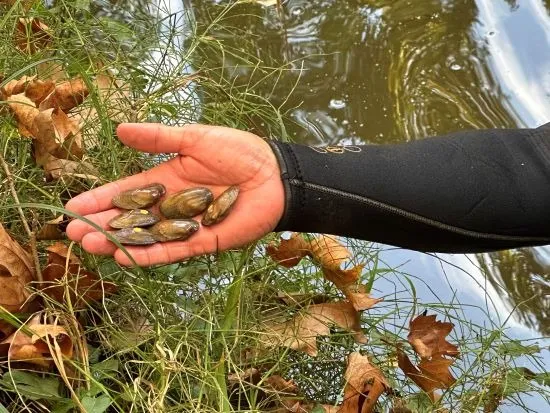
Each one fits in the palm of a hand: 4.5 centimetres of shell after ten years of care. On Wednesday 28 October, staff from the Garrotxa Volcanic Zone Natural Park and the Banyoles Lake Consortium released 52 of these freshwater mussels (Unio mancus) into the Fluvià river at Prat d’en Gou, upstream of the town of Olot, in north-east Catalonia.
It is a small batch, and whether it works will depend on how many survive in the river over the coming years. The team waited until they reached that size because, according to the park, it gives them “sufficient guarantees” of good survival.
They eat by filtering the water
These protected freshwater molluscs feed by filtering water, cleaning it as they go. Their life cycle has an unusual twist: the larvae spend a stage attached to native fish such as the Catalan chub and the barbel. That makes them sensitive to the health of those fish, and the park treats them as a good indicator of river quality.
Prat d’en Gou was chosen because it has what they need: root-lined banks with good riverside woodland, clean sediment and good water quality.
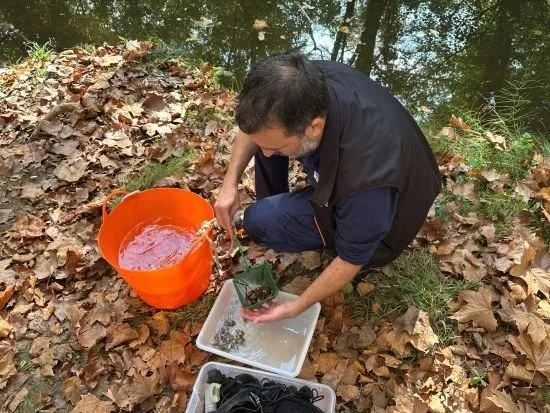
A technician prepares the mussels on the bank of the Fluvià before releasing them, 28 October 2026. Photo: Parc Natural de la Zona Volcànica de la Garrotxa / Generalitat de Catalunya (Parcs Naturals de Catalunya, 28-10-2026).
Offspring of the river’s own mussels
All 52 hatched in 2015 at the Banyoles Lake mussel lab, under the EU-funded LIFE Potamo Fauna project (2014-2017), from parent mussels collected in the same river, at Besalú and at the Molí de Sant Roc stretch in Olot.
They are joining a population that has proved tough. In April, the park and the consortium counted more than 130 live mussels in two stretches of the Fluvià, just before Olot and near the Font de la Gruta. Among them were 15 mussels tagged in 2014 and 2016, which had survived Storm Gloria in 2020 and the severe drought of 2021 to 2023.
The park’s aim is a healthy population in the stretch of the Fluvià that runs through the protected area, from which the species can spread along the rest of the river.
Sources
- Parcs Naturals de Catalunya · S'alliberen més d'una cinquantena d'exemplars de nàiades per enfortir les poblacions del riu Fluvià (28-10-2026, in Catalan)
- Parcs Naturals de Catalunya · Survey of the freshwater mussel population in the Fluvià river (24-04-2026, in Catalan)
- COPE Girona · Crían 50 mejillones durante diez años y los liberan en un río de Cataluña (30-10-2026, in Spanish)
- Ecoticias · Lab-reared freshwater mussels return to the Fluvià river (in Spanish)