Hawk-shaped kites and ‘looming eyes’ buoys cut seabird bycatch in Cornish nets
Ten Cornish fishers tested two marine scarecrows on 1,057 nets over 17 months. Kites shaped like a bird of prey cut the odds of a net catching guillemots or razorbills by 71%, and spinning ‘eye’ buoys by 59%. Neither device stopped every capture, and the trial covered a single fishery.
A black, hawk-shaped kite hovers over a Cornish fisher’s nets, tethered to a buoy. To a guillemot hunting for fish, that silhouette means danger, and it stays away. That is the idea behind a trial with ten fishers in south-west England, published in Conservation Letters by the University of Exeter, the RSPB and Fishtek Marine.
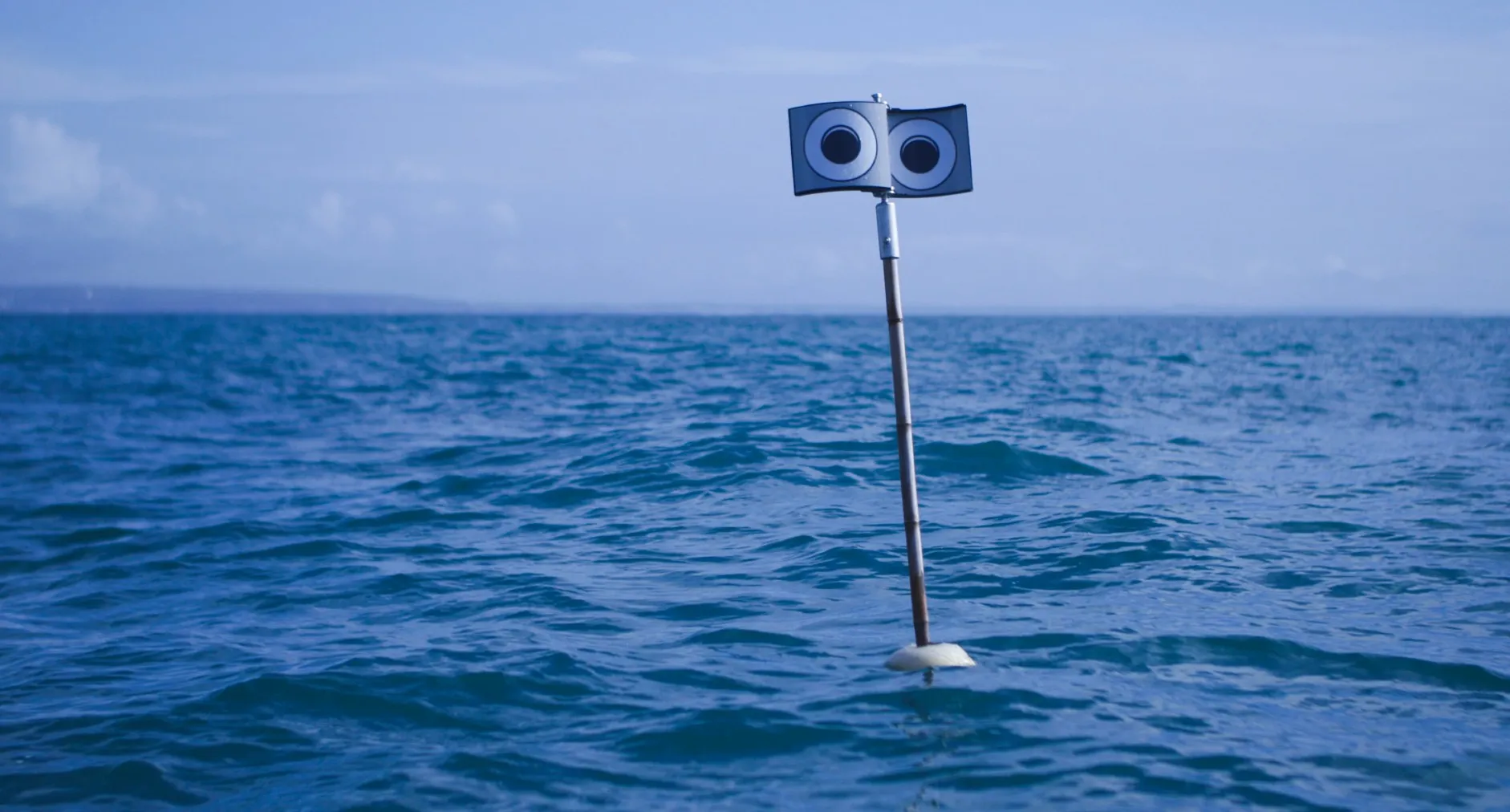
Between October 2023 and March 2025 the team monitored 1,057 gillnets: a third with nothing, a third with kites and a third with ‘looming eyes’ buoys, two large eyes that spin in the wind. In total, 153 birds were caught, most of them common guillemots (81) and razorbills (57).
Two different scares, similar results
With a kite, the odds of a net catching one of these birds fell by 71%; with a buoy, by 59%. The authors found no clear difference between the two. “This technology means that fishing can continue while reducing the effects on seabirds,” says Tom Hooper of Fishtek Marine.
Around 95,000 diving birds are estimated to die in gillnets in European waters every year. Guillemots and razorbills dive for their food, and a net they cannot see is a trap.
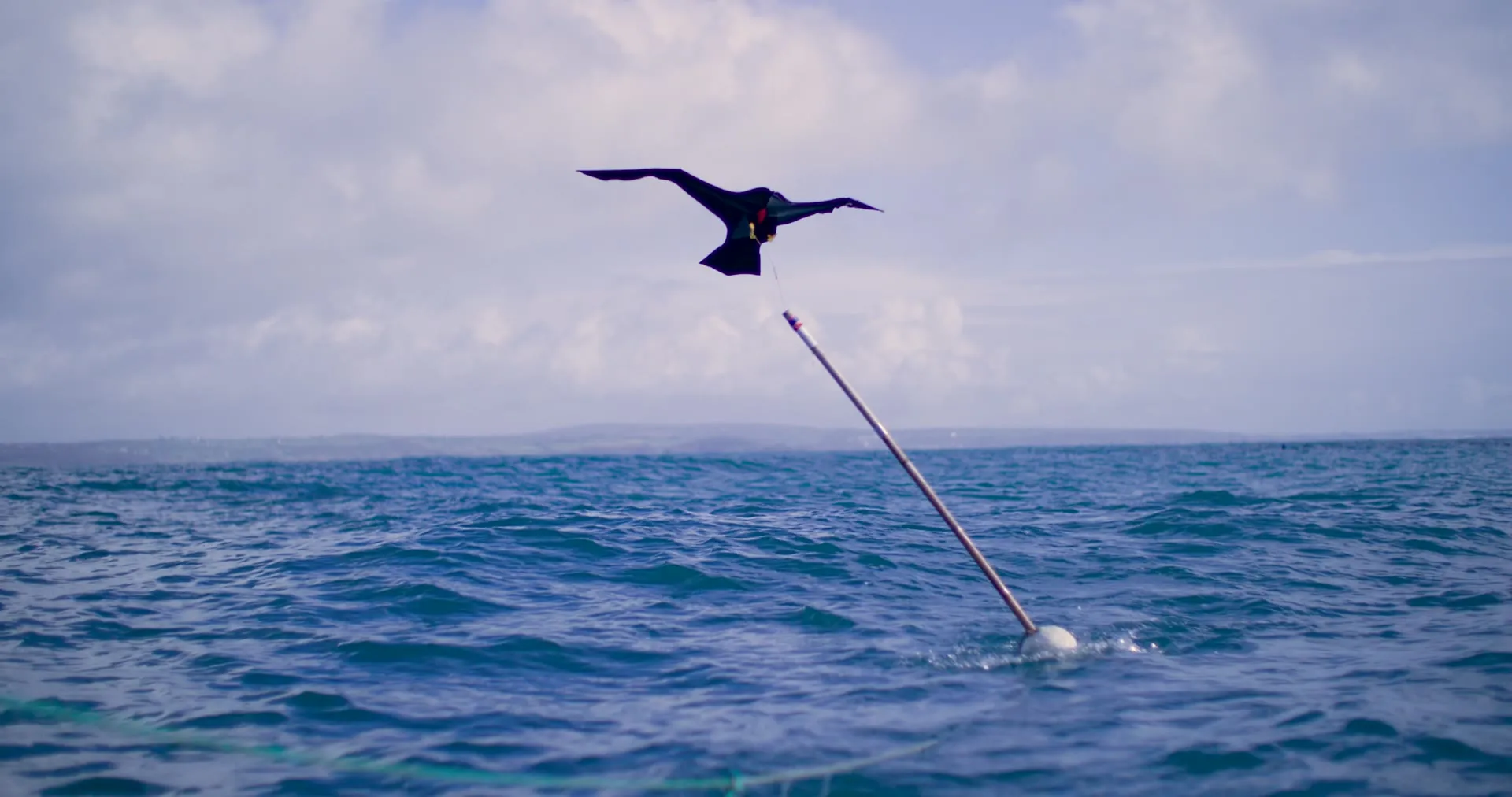
The hawk-shaped kite above a buoy beside the nets. Image: Fishtek Marine / University of Exeter.
What still needs testing
The trial covered one fishery and neither device prevented every capture. The figures measure the odds of a net catching birds, not how many birds would be saved across a fleet. Kites struggled in very light winds and were hard to handle in strong ones. The study did not test whether birds get used to the devices over time, or whether the buoys attract seals.
Catches peaked in January and February (120 of the 138 birds of these two species), so the devices could be targeted at those months. The authors want them tested in other fisheries before they are recommended more widely.
Images courtesy of the University of Exeter and Fishtek Marine.
Sources
- Horton et al. · Above Water Deterrents Reduce Auk Bycatch in Gillnet Fisheries off the United Kingdom, Conservation Letters (2026)
- Mongabay · Googly-eyed buoys and kites help keep seabirds out of fishing nets (23-10-2026)
- BirdGuides · Simple devices cut seabird bycatch in Cornish fishing trial (22-10-2026)
- Cornwall IFCA · Seabird bycatch mitigation project