Edinburgh Zoo welcomes two Asiatic lion cubs, its first in seven years
First-time mother Bindee gave birth on 11 October as keepers watched on the den cameras. The cubs will spend months indoors and can't be seen yet: the lion habitat is closed to visitors.
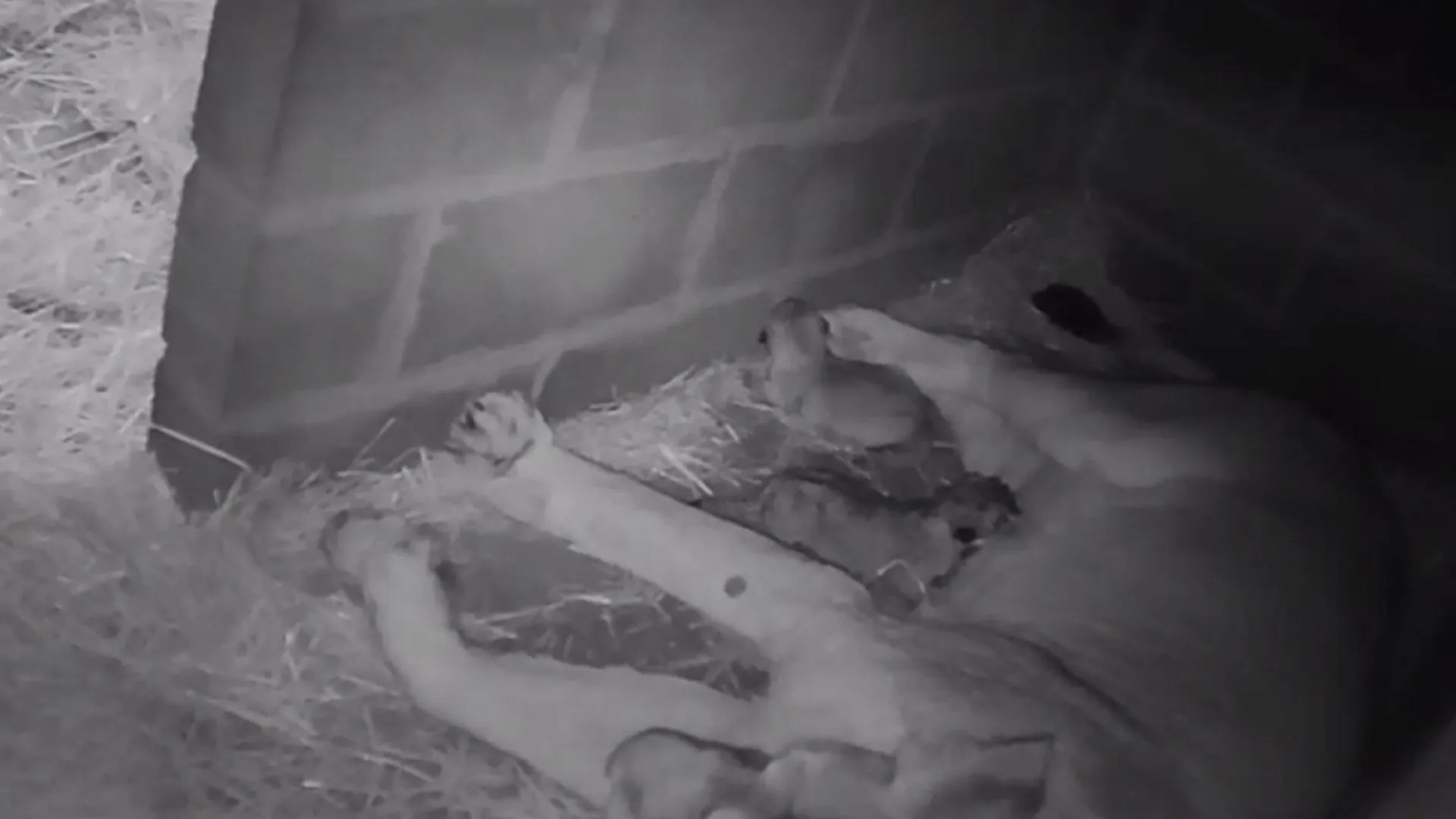
Keepers at Edinburgh Zoo watched the birth on a screen. Bindee, a first-time mother, gave birth to two Asiatic lion cubs on 11 October, filmed by the cameras in her den. They are the first lions born at the Scottish zoo in seven years. The Royal Zoological Society of Scotland (RZSS), the wildlife conservation charity that runs it, announced the news on 22 October. Visitors will have to wait: mother and cubs are being kept away from the public and the lion habitat is closed until further notice.
A first-time mum and a laid-back dad
Bindee arrived in Edinburgh in December 2024 from the zoo in Mulhouse, France, to pair with Jay, the zoo’s male, as part of a European breeding programme for this endangered subspecies. Keepers suspected she was pregnant when they noticed her larger stomach and slower pace, and were sure when she began pacing and making final adjustments to her den.
“We are so proud of Bindee and Jay and absolutely thrilled with the beautiful new arrivals!” said Alison MacLean, RZSS animal team leader. “Mum is happily bonding with the little cubs while Jay is his usual chilled-out self.”
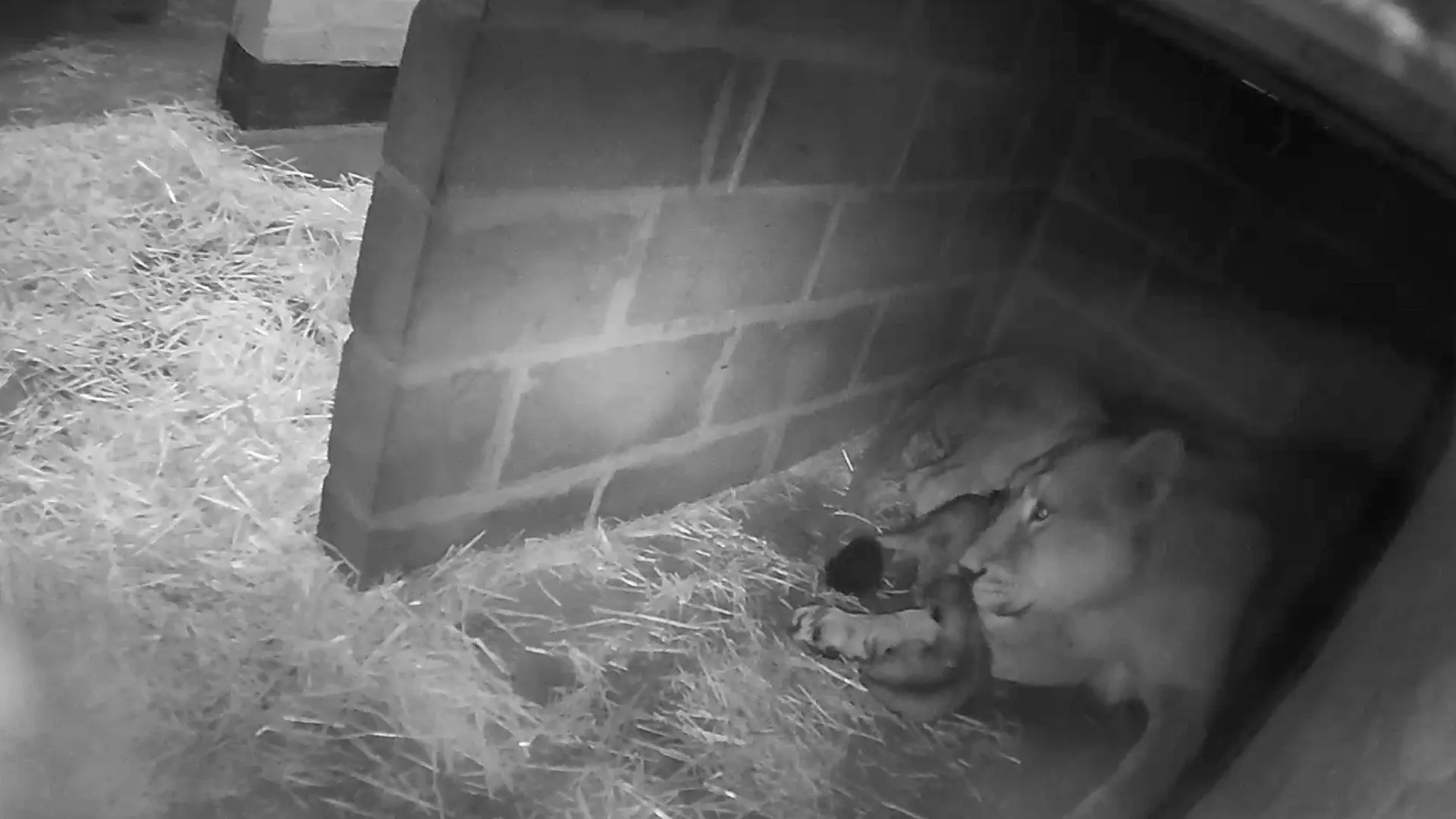
Bindee with one of the cubs, seen on the den camera. Photo: RZSS.
Fewer than a thousand in the wild, all in one place
Asiatic lions once ranged from Turkey to eastern India, but hunting pushed them to the brink of extinction. Today they survive in the wild only in the Indian state of Gujarat, around Gir National Park. The May 2025 census counted 891 lions, up from 674 in 2020, according to Gujarat Forest Department figures reported by Down To Earth.
Having the entire wild population in a single region leaves it exposed to a disease outbreak or a natural disaster, RZSS points out. That is why European zoos keep a healthy, genetically diverse back-up population.
Months in the den
The cubs will spend several months indoors before venturing out. As is natural for lions, Bindee will do most of the caring. The zoo has not yet said whether they are male or female or what they will be called, and will announce when the lion habitat reopens.
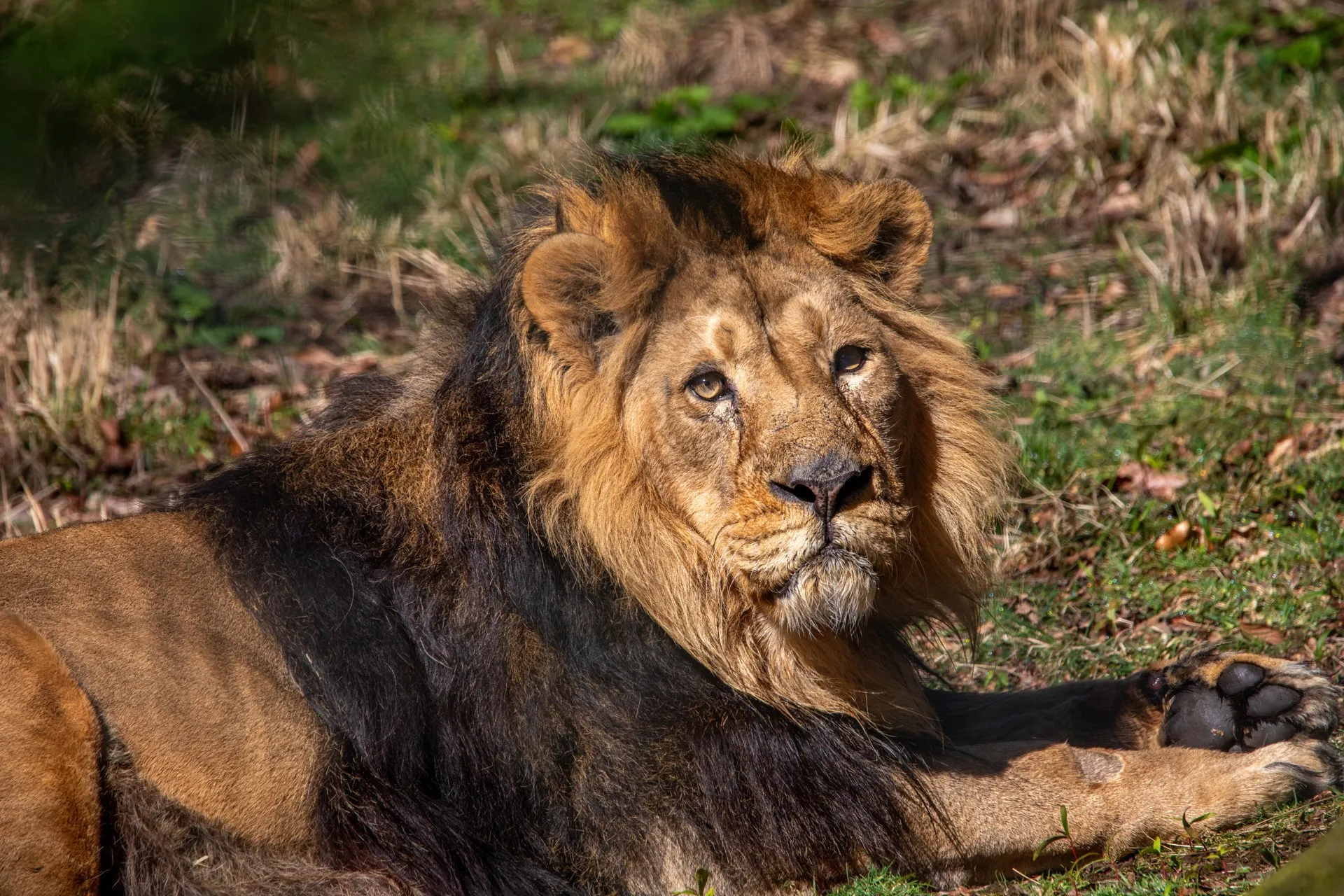
Jay, the father. Photo: RZSS.
Photos and video courtesy of the Royal Zoological Society of Scotland (RZSS).