Giant tortoises now outnumber people in the Seychelles
A study by the Seychelles Islands Foundation and the University of Exeter puts the giant tortoise population of Aldabra Atoll at almost 183,000. In the 19th century fewer than 1,000 were left.
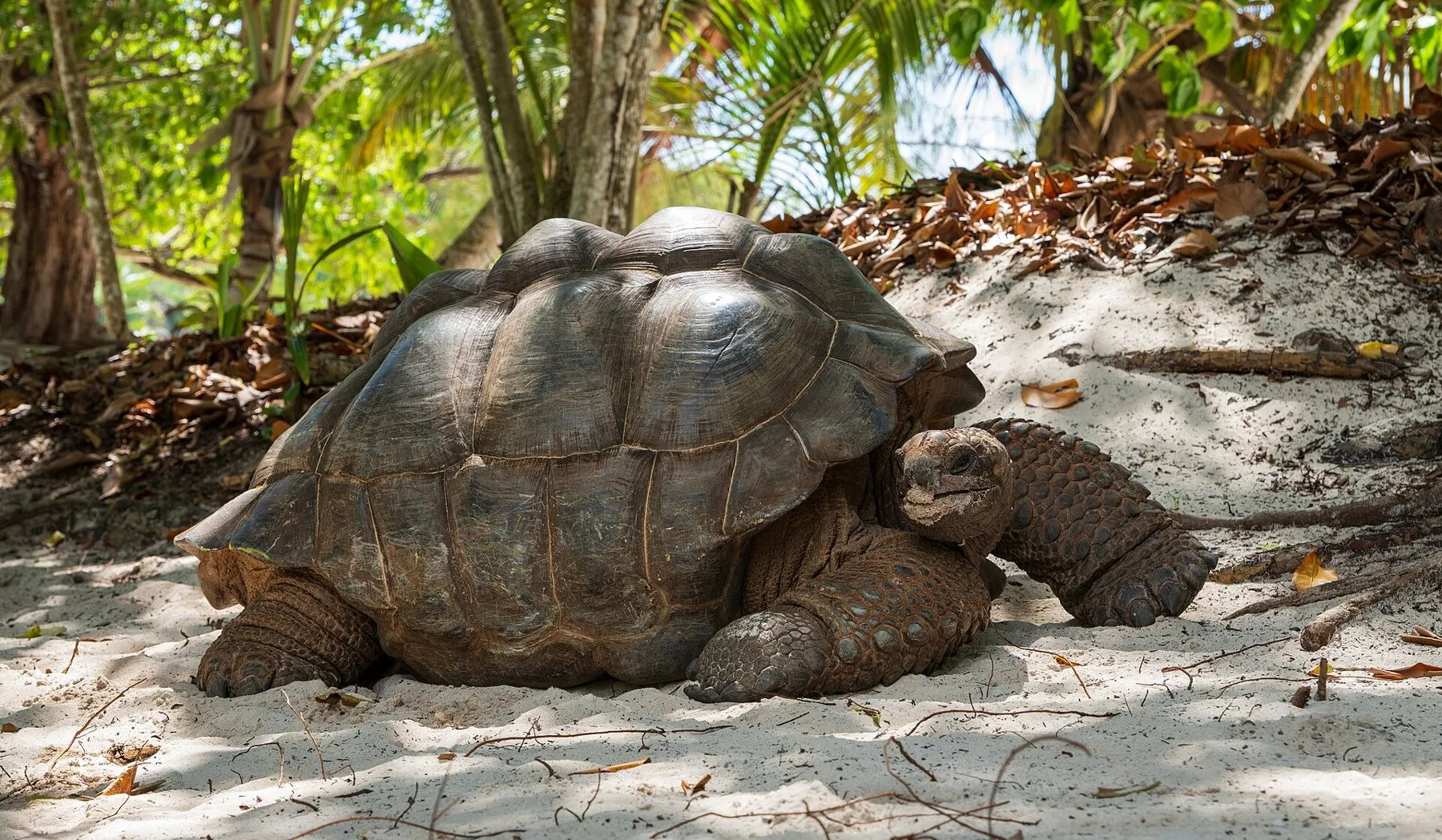
A century and a half ago they were nearly wiped out. Today a single atoll in the Seychelles is home to more giant tortoises than there are people in the entire country. A study by the Seychelles Islands Foundation (SIF) and the University of Exeter, published in Ecology and Evolution, estimates that Aldabra holds almost 183,000 adult and subadult giant tortoises. The Seychelles had about 123,000 residents at the end of 2025.
It is the highest estimate ever recorded for the species. By the 19th century, heavy hunting had pushed the population below 1,000.
How they were counted
Counting tortoises on Aldabra is hard: many hide in dense scrub or shade. The team analysed five years of counts made by SIF staff between 2018 and 2022 and used a statistical method – Bayesian distance sampling – that corrects for animals observers miss. Over those years the population looked broadly stable.
SIF chief executive Frauke Fleischer-Dogley called the result “proof of what long-term commitment to conservation can achieve”. Aldabra, a UNESCO World Heritage Site, has been protected and almost free of people for decades.
What it doesn’t mean
The new figure does not mean the population has nearly doubled since the late 1990s, when about 100,000 was the accepted number. The authors are clear on this: older surveys probably missed many animals, so the two figures cannot be compared directly. What the study does provide is a far more reliable starting point. “The numbers provide a baseline – not an endpoint,” says Exeter researcher Dave Hudson.
The risks have not gone away. Climate-driven droughts could cut shade and food, and rising seas threaten the low-lying atoll. The scientists say continued vigilance is essential.