People with ALS across Spain can now save their own voice for free with AI
On 28 October the Spanish ALS association adELA and AI company ElevenLabs signed an agreement so that any ALS patient in Spain whose voice is affected can create a digital version of their own voice free of charge, from current or old recordings. Patients do not need to be adELA members. Talking with the digital voice takes patience: conversations move more slowly than before.
“Being able to hear my own voice means I can go on being myself.” Those are the words of Aníbal, a former teacher with ALS who is gradually losing his voice and mobility, and who has already created a digital copy of his voice with ElevenLabs’ technology.
Since Wednesday 28 October, anyone with ALS in Spain whose voice is affected can do the same at no cost. The agreement was signed that day by Jorge Riquelme of ElevenLabs and Carmen Martínez Sarmiento, president of the Spanish ALS Association (adELA), according to Europa Press.
Built from recordings made before the illness
The system builds a digital version of a person’s voice from current or old recordings: people can record themselves before the disease affects their speech or, if it is already too late, upload audio from years ago. “The people listening hear you, the voice you had before it was affected,” said Luis Carrascosa, a member of adELA’s board. It is not, he added, “the typical robotic voice”.
Patients apply on the ElevenLabs website. They sign up, choose adELA as their partner organisation and send a document confirming their voice disorder; the association checks it and approves the application. It is open to every patient in the country, not just members. The association’s speech therapists will set the system up during their visits, after being trained to do so.
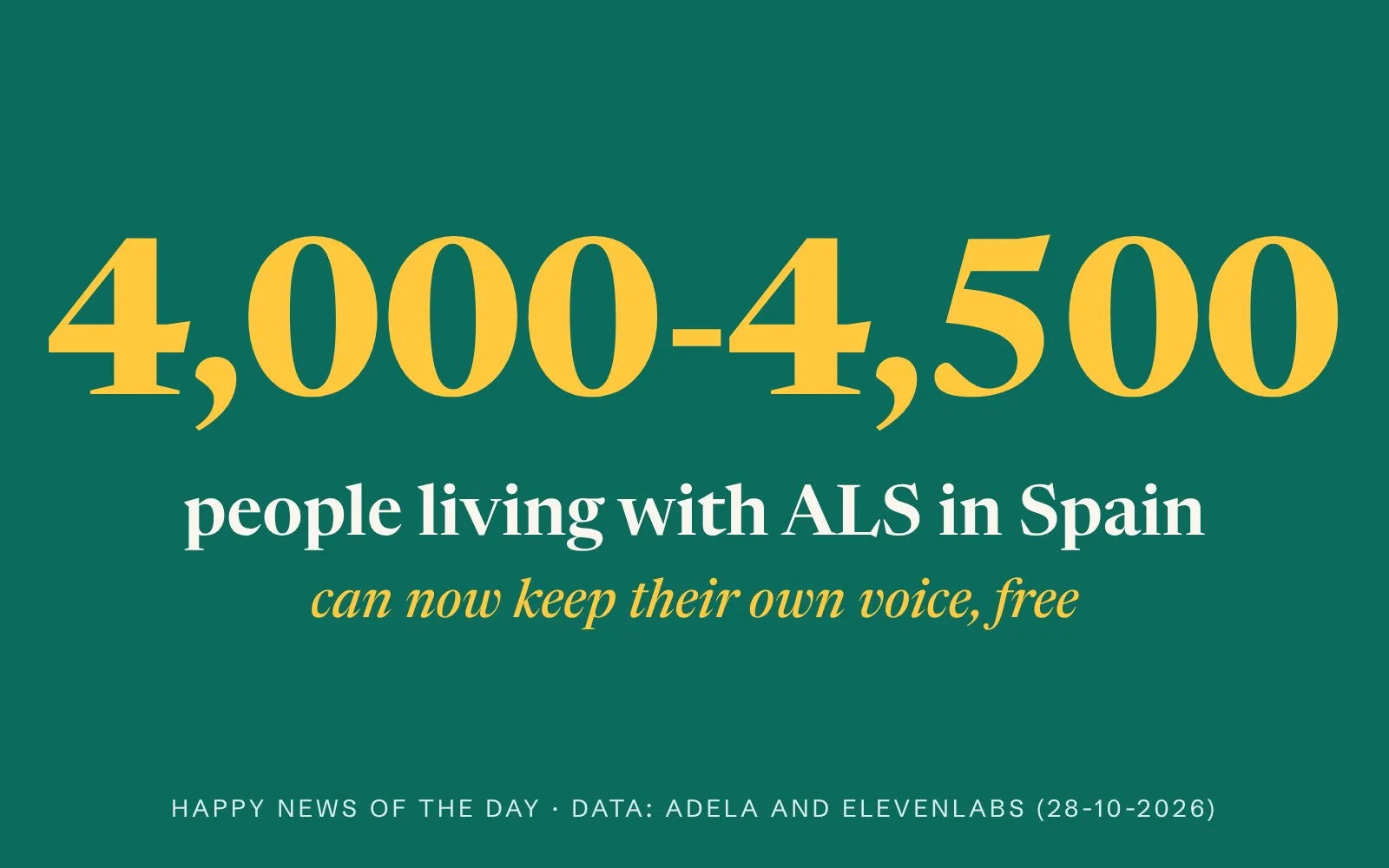
Between 4,000 and 4,500 people live with ALS in Spain, according to ElevenLabs. The company says Spain is the first country where it offers the technology through a national patient association, and that this is the first initiative of its Impact Program there.
Why it’s good news
ALS is a progressive neurodegenerative disease that often takes away speech. Still sounding like yourself helps people avoid becoming isolated. “Psychologically, being able to speak with your own voice is very important,” Carrascosa said, because “it is part of your identity”. Juanan, one of the patients who tried the system at the launch, put it this way: “I decided to clone my voice because, from the moment I was diagnosed, I knew my voice was going to fade.”
Conversations move more slowly
The digital voice does not bring back the old pace. Antonio, who has lost his voice entirely, said the communication device allows “a fairly acceptable level of communication”, but that you need much more patience to join a conversation, because you cannot keep up “at the same speed as before”. To type what they want to say, users can rely on a camera that reads eye movements over a keyboard on a tablet, Carrascosa explained.
Martínez Sarmiento hopes the technology will keep improving until those conversations “can be much more fluid”.