Jordan starts building plant to pipe Red Sea water to Amman
On 18 November the foundation stone was laid in Aqaba for a $6.7bn project: a desalination plant producing more than 300 million cubic metres a year and a pipeline of about 418 km to the capital. It is expected to cover around 40% of Jordan's household water in one of the world's most water-scarce countries. The caveat: the water will not arrive until the end of 2030.
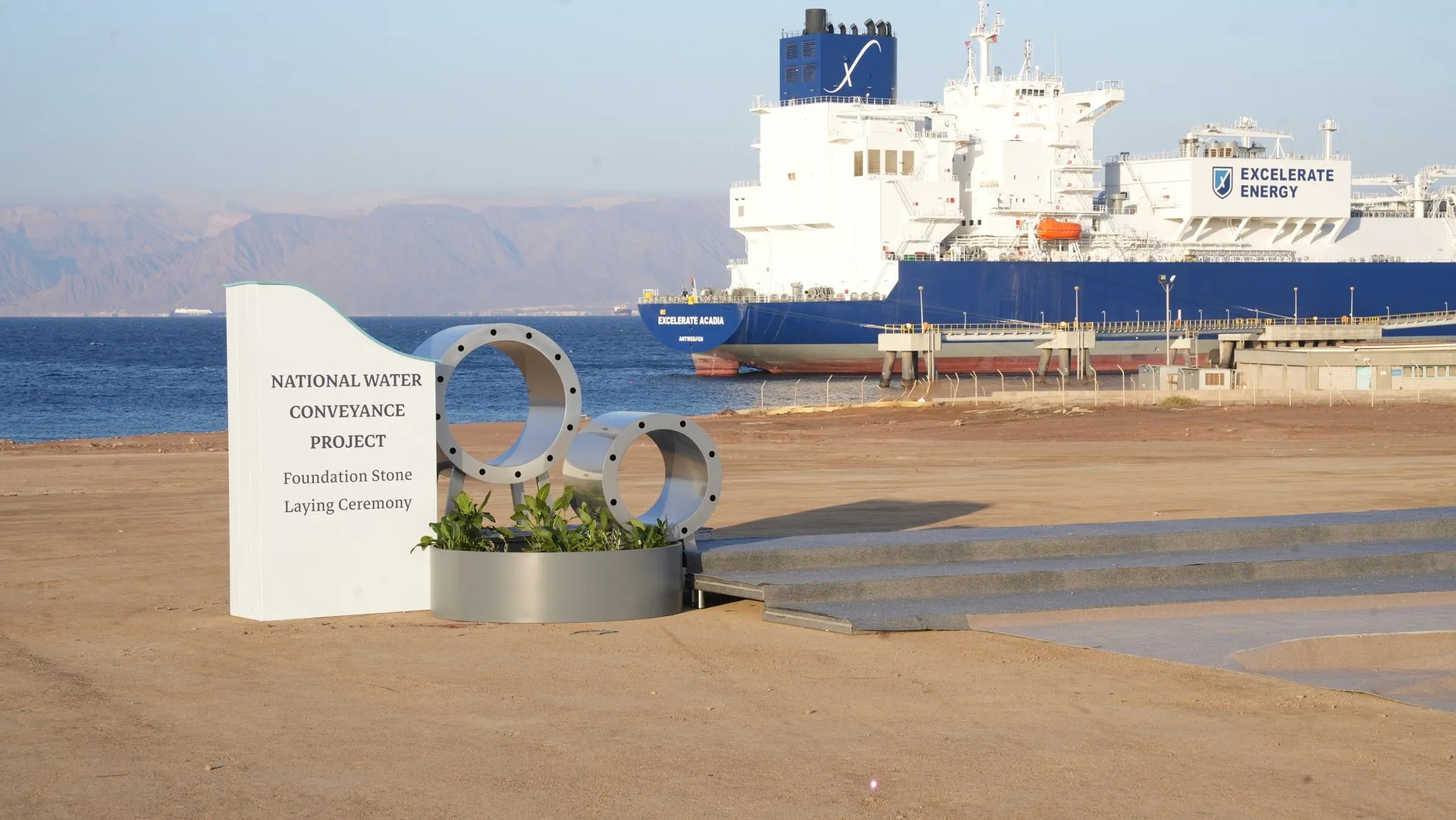
In many homes in Amman, piped water arrives once a week, according to The National. To change that, Jordan has started building the biggest water project in its history: a desalination plant in Aqaba, on the Red Sea, and a pipeline of about 418 km that will carry the water up to the capital.
Prince Faisal bin Al Hussein laid the foundation stone on 18 November on behalf of King Abdullah II. Construction will take about four years: according to the consortium, water should start flowing at the end of 2030.
More than 300 million cubic metres a year
The plant will desalinate more than 300 million cubic metres a year (about 851,000 a day), three times what the Disi conveyor, Amman’s other big water source, supplies today, according to Smart Water Magazine. At that volume, the project expects to cover around 40% of the country’s household water and provide about 100 litres a day per person to more than five million people.
Jordan is one of the most water-scarce countries on Earth. The Green Climate Fund estimates each resident has about 61 cubic metres a year, far below the 500 threshold considered absolute scarcity.
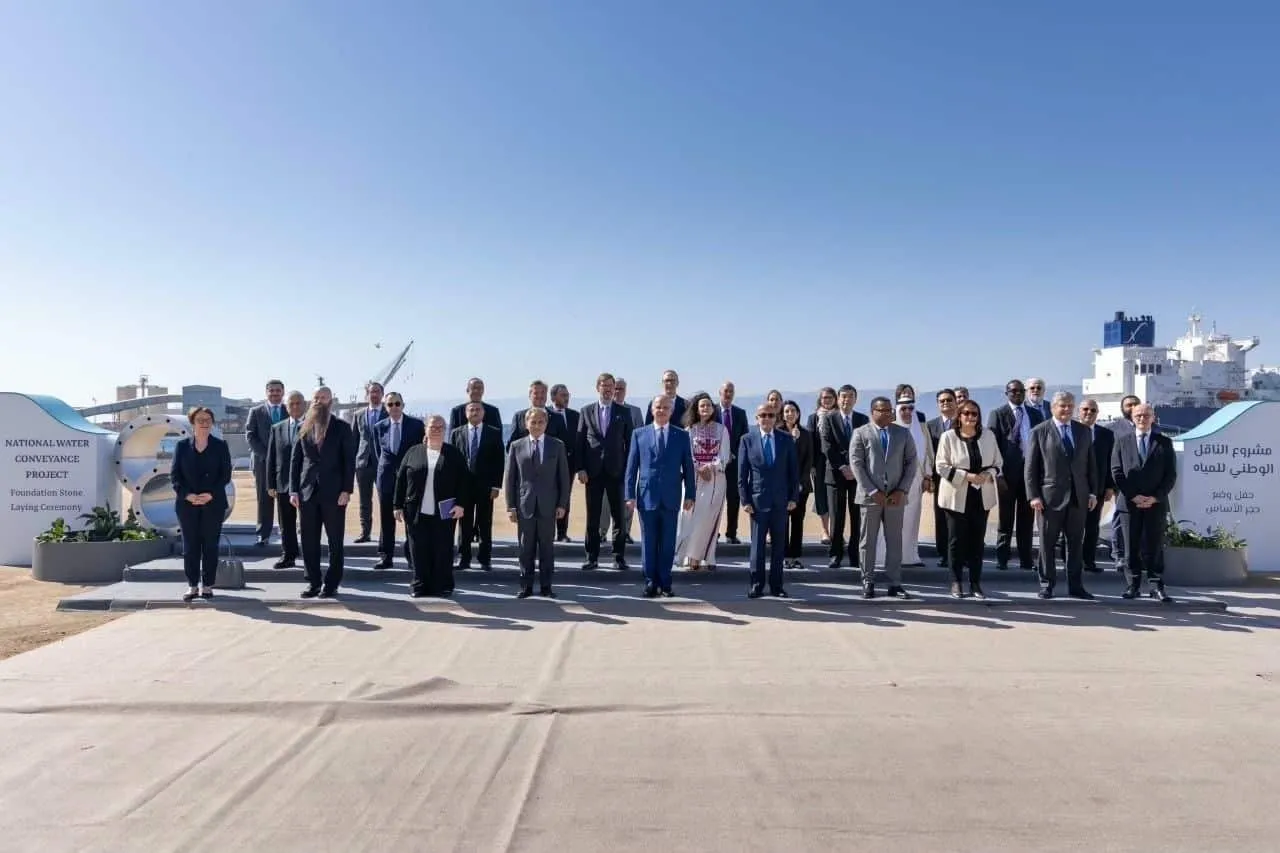 Jordanian, French and European officials at the foundation stone ceremony in Aqaba. Photo: Government of France / Minister Delegate for Foreign Trade, courtesy of Meridiam.
Solar power to lift water 1,100 metres
Getting water from sea level to Amman means pumping it up to 1,100 metres. To cut costs and emissions, the project includes a 280 MW solar plant, the largest in Jordan. Meridiam estimates it will cover about 80% of the desalination plant’s energy; the Green Climate Fund, looking at the whole system including pumping, puts it at around 30%.
The project costs $6.7bn and runs as a 30-year public-private partnership. It is led by France’s Meridiam with Suez and Jordan’s social security investment fund, and built by Vinci and Orascom. More than 20 lenders back it, including the European Investment Bank, the EBRD and the Green Climate Fund, whose $295m is its largest commitment to a single country. More than 33,000 people will work on construction.