Archaeologists dig up a Roman temple to Mars just inches under a German forest
Found beside the Kapersburg fort near Frankfurt, on the old frontier of the Roman Empire, it came with a statuette of Victoria, the goddess of victory.
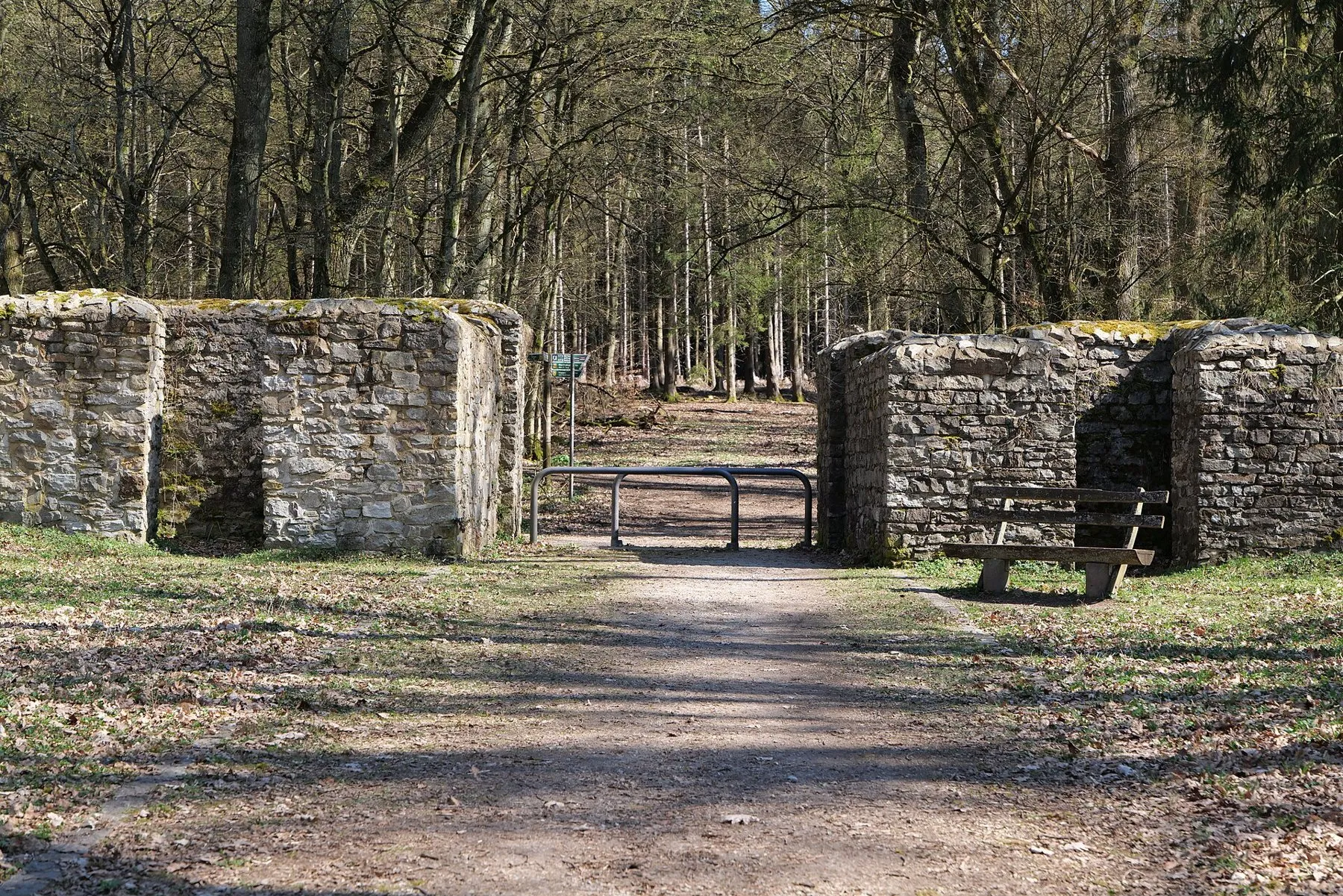
Under a thin layer of soil in the Taunus hills north of Frankfurt, archaeologists have found a Roman temple that was most likely dedicated to Mars, the god of war. Hesse’s State Office for Monument Preservation announced the find in late September.
The temple sits beside the Kapersburg fort, near Rosbach vor der Höhe, in a patch of forest cleared by a storm. The fort was part of the Upper Germanic-Raetian Limes, the Roman Empire’s frontier in Germania and a UNESCO World Heritage Site since 2005. Experts date the temple to the third century.
“That is a temple,” limes expert and archaeologist Kai Mückenberger told Hesse’s public broadcaster.
A shrine with a walkway
The building is rectangular, about five metres long, with a smaller square chamber inside whose walls are nearly half a metre thick. Researchers think it may have had covered walkways running around a central prayer room.
An inscription points to Mars. Nearby lay a statue fragment that may show the god himself, and a broken statuette identified as Victoria by her wings, palm branch and laurel wreath.
Life around the fort
The dig also turned up blacksmith pits, ovens, an amphora reused in a building’s foundations, a late-antique piece of jewellery (a sign people kept visiting after the soldiers left) and a votive stone with a Latin inscription still being deciphered. It might finally reveal the settlement’s name.
The fort was built in the second century, probably under Trajan or Hadrian, and garrisoned for about 150 years by a unit called the Numerus Nidensium until it was abandoned in the mid-third century.