NASA's Roman telescope is focusing nearly 30% better than expected
After nudging its secondary mirror by a sixteenth of a hair's width, the telescope's main instrument – launched on 30 August – is producing sharper images than its team predicted. It will hunt for planets, map galaxies and probe dark energy.
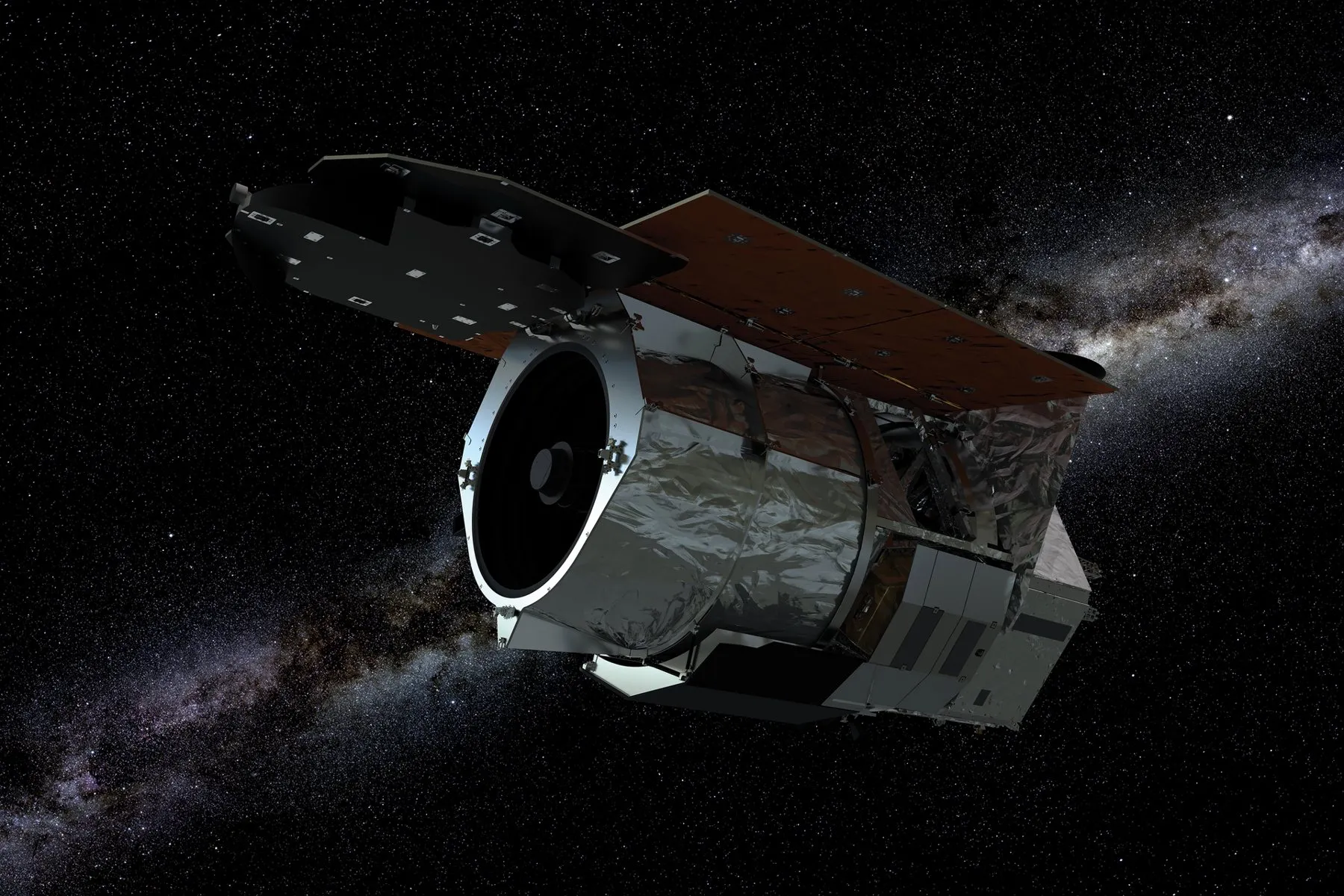
NASA’s Nancy Grace Roman Space Telescope, launched on 30 August, is already seeing more clearly than its engineers expected. After a tiny adjustment to its secondary mirror, its main camera, the Wide Field Instrument, shows an optical error of 63 nanometres, against a requirement of about 90. NASA says that is nearly 30% better than the team predicted.
The mirror moved by roughly one-sixteenth of the width of a human hair. NASA compares it to shifting the tip of the Empire State Building by slightly less than a penny. Since September the team has checked the camera’s 18 detectors, its electronics, filter wheel, calibration lights and thermal system, and moved the alignment mechanism from its launch position to best focus.
“It’s both exciting and a huge relief to see that it’s working well,” says Dave Hickey, an instrument systems engineer at NASA Goddard. Senior optical engineer Alden Jurling says future survey images will be sharper than expected.
Why it matters
Roman is built to map huge patches of sky in one go. Astronomers want to use those images to find thousands of planets beyond our solar system, trace how galaxies formed and look for clues about dark energy, the mysterious force behind the universe’s speeding-up expansion. Sharper optics mean clearer detail in every one of those studies.
The second instrument, the Coronagraph, which blocks starlight so nearby planets can be seen, came out of launch slightly out of focus – less than expected – and now meets expectations after its own correction.
What’s still to come
The telescope is still being commissioned. The figures are NASA’s own measurements, and no new science images have been released yet. Over the coming weeks the Coronagraph team will keep calibrating its camera and deformable mirrors before demonstrating how well it blocks starlight. NASA has not yet given a start date for the science surveys.