Sewage spills into the Thames drop 86% thanks to London's super sewer
In its first full year, the 25km tunnel under London cut overflows into the river from more than 21 million to under 3 million cubic metres. The figure is the companies' own modelled estimate, in a dry year.
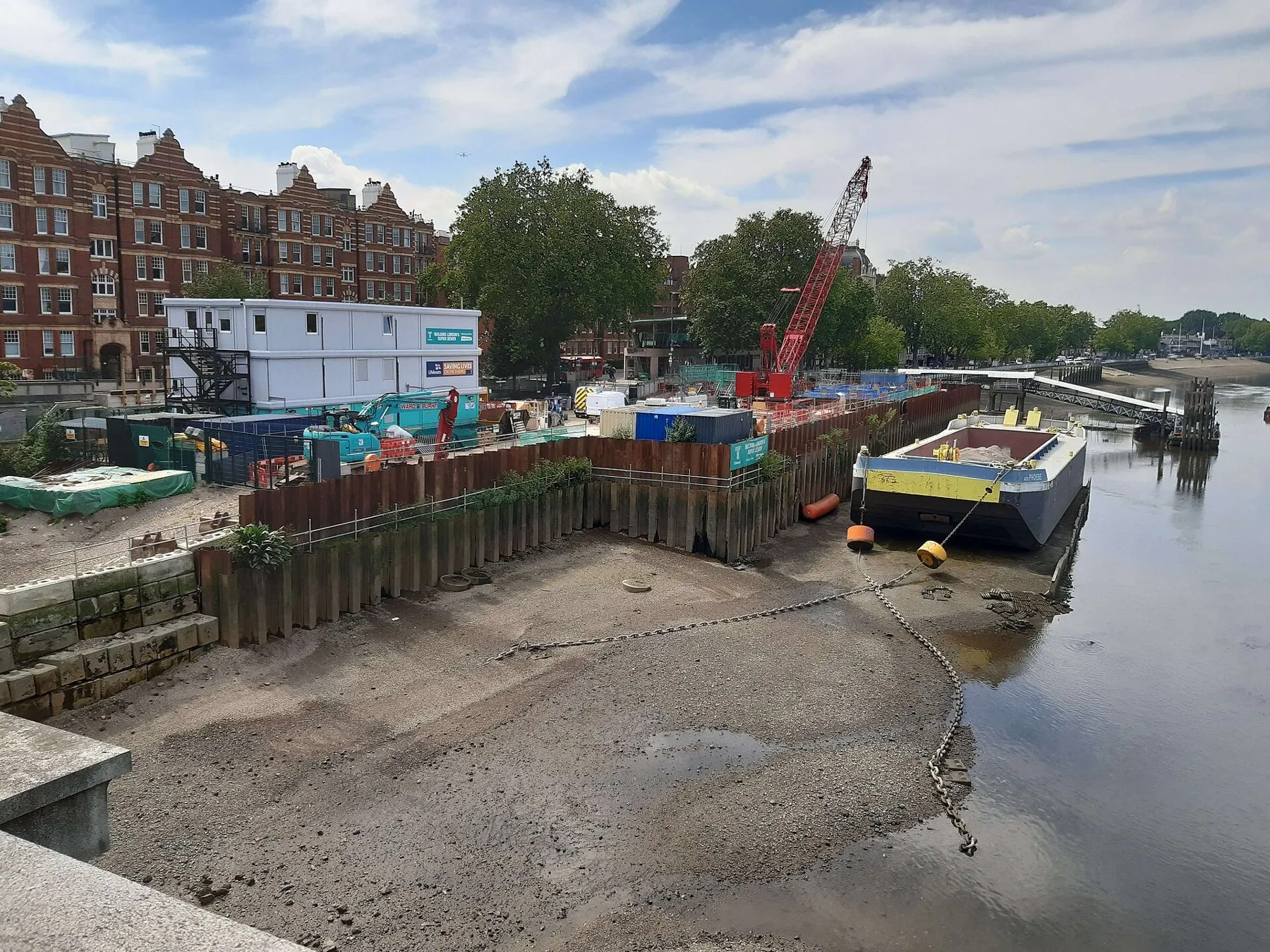
A river declared biologically dead in the 1950s is now taking in far less sewage. The Thames Tideway Tunnel, a 25km sewer running beneath the Thames through London that came into service in 2025, cut storm overflow discharges by 86% that year – from an average of more than 21 million cubic metres before the tunnel to just under 3 million.
The figures come from the first annual report by Thames Water and Tideway, the company that built the tunnel, published on 13 October as day-to-day operation passes to Thames Water.
What’s changed in the water
The tunnel captures sewage that used to spill out of London’s Victorian network whenever heavy rain hit. According to the report, it kept around 84 tonnes of wet wipes, sanitary products and plastics out of the river in 2025, while days with elevated health risk from overflows fell from 75.7% to 10.4%. Volunteers from Thames21 who monitor the foreshore see it too: sewage-related litter dropped from 30% of items found to 18%. Only one low-oxygen event all year was linked to an overflow.
The caveats
The 86% is not a direct measurement – it is an estimate based on volumes modelled by the companies themselves. And 2025 was unusually dry, which on its own means fewer overflows. The report argues the fall goes well beyond what rainfall alone would explain, but the coming years, also due to be reported annually, will be the real test.
Nor does the tunnel fix everything. It covers the tidal stretch through London, while Thames Water – heavily criticised over spills elsewhere in its network – plans to spend more than £20bn over five years. The Zoological Society of London welcomes the improvement but warns there is more work to do.