Bleached corals recover in seven weeks after touching healthy clones
Stanford scientists found in the lab that a healthy coral can pass its algae to a bleached clone when the two touch. It was a small experiment and is still a long way from the reef.
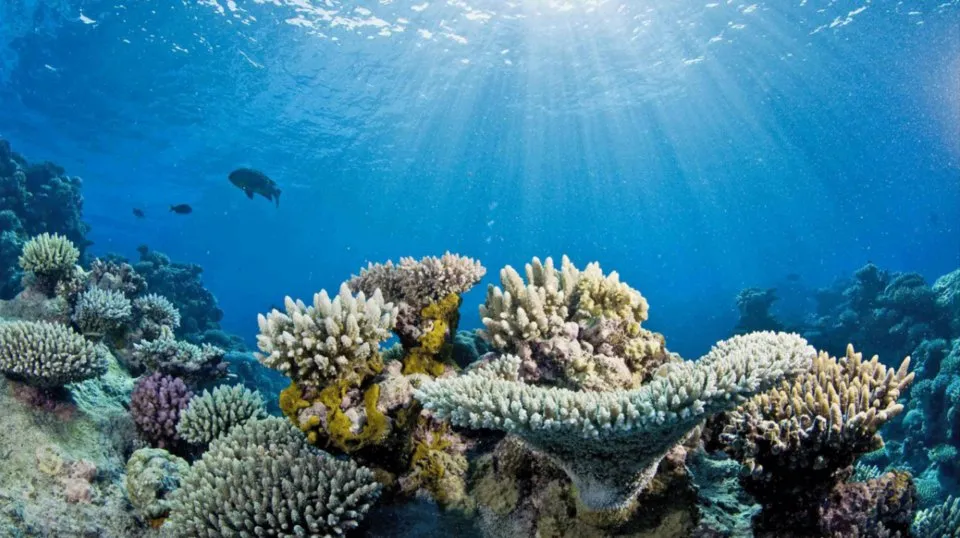
A bleached coral is not necessarily a lost cause. Researchers at Stanford University have shown in the lab that when a bleached coral fragment touches a healthy piece from the same colony – a genetic clone – the algae that feed the coral move across and the bleached piece regains its colour. The study is published in Science Advances.
According to Euronews, the team worked with ten pairs of Pocillopora damicornis fragments: five pairs were kept touching and five were held a few millimetres apart. All five bleached fragments in contact made a full recovery in about seven weeks; all five kept apart died. A single week of contact was enough to set recovery in motion.
How it works
The two tissues fuse, forming a tiny bridge that carries symbiotic algae and nutrients. Once inside, the algae multiply fast – about ten times faster than in wild corals, the authors say, and the quickest coral recovery documented so far. The discovery was an accident: in 2025 a colony tipped over in a tank at Hopkins Marine Station and colour returned exactly where the corals touched.
“These bleached corals are not a lost cause,” says lead author Danny Collins.
What’s still missing
This is a small lab experiment with a single species. The method needs a healthy clone next to every damaged coral, which is impossible across a whole reef, and the researchers stress it is not ready for the ocean. Nor does it protect corals from heat. “This is a recovery story. It doesn’t blunt heatwaves; it just helps the aftermath,” says marine biologist Steve Palumbi.
The team is now working on culturing the algae and delivering them to bleached corals without direct contact, with field trials planned in Hawaii and Palau in the coming months to years. The need is pressing: reefs lost around 9% of their living coral between 2023 and 2024 alone.