Yak herders from Bhutan, India and Nepal launch the Himalaya's first regional network
The Himalayan Yak Herders' Network was launched on 23 October at Bhutan's Royal Highland Festival. It is run by the herders themselves and aims to protect pastures that millions of people depend on. It arrives as herds shrink and young people leave: a first step, not a fix.
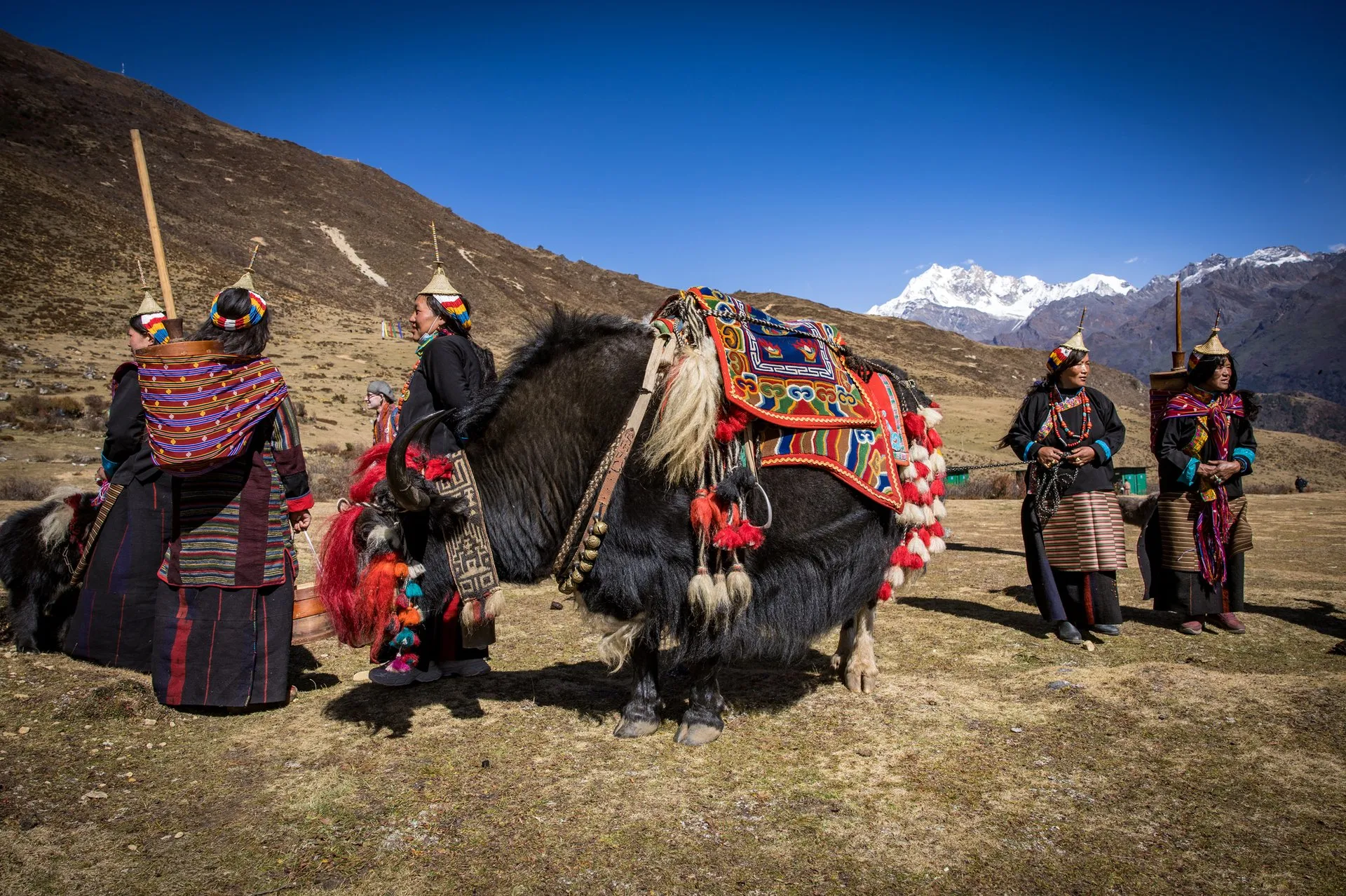
Yaks draped in embroidered blankets, herders in conical hats and black tents in a valley ringed by snowy peaks. There, at the Royal Highland Festival in Laya, northern Bhutan, the Himalayan Yak Herders’ Network was born on 23 October: the first to link these communities across borders.
It brings together three organisations: the Yak Federation of India, the Bhutan Yak Federation and the Yak and Chauri Farmers Federation Nepal. It is led by the herders themselves, with its secretariat in Bhutan. According to the plaque unveiled at the festival, it was inaugurated by King Jigme Khesar Namgyel Wangchuck.
A decade of meetings
The idea first came up in 2016, when herders, researchers and government representatives from the three countries began meeting through an ICIMOD initiative for the Kangchenjunga landscape. ICIMOD, the International Centre for Integrated Mountain Development, is an intergovernmental organisation.
The network will let herders speak with one voice to governments, share what works from valley to valley and train new herders, according to ICIMOD.
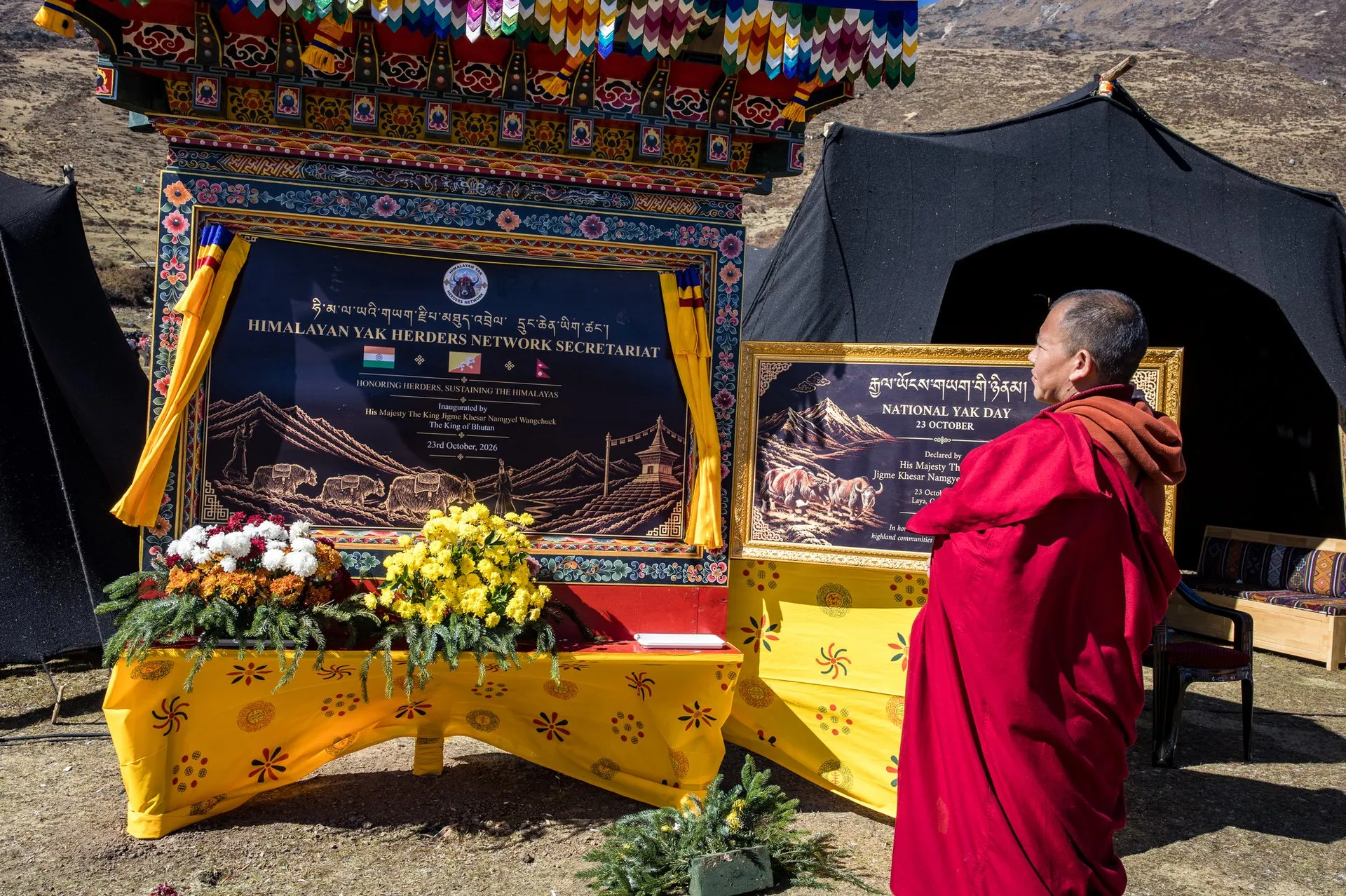
The plaque for the network’s secretariat, inaugurated on 23 October 2026. Photo: Jitendra Raj Bajracharya / ICIMOD.
Shrinking pastures, departing youth
Rangelands cover more than 60% of the Hindu Kush Himalaya and support an estimated 25 to 30 million people, according to the organisers. But they are degrading, climate change is altering them, wild animals attack livestock and many herders struggle to reach markets and basic services. On top of that, many young people are leaving the highlands.
Herds show the strain. ICIMOD reports a significant decline in yak numbers across the three countries in recent decades. In India, the 2019 livestock census recorded about 58,000 yaks; in 2026, the Indian federation’s 526 members reared about 32,000 between them.
Why this is good news
For the first time, people who live from yaks on both sides of the range have an organisation of their own to defend their pastures and their way of life. The network will not stop climate change or depopulation on its own, but it gives these families something they did not have: a shared voice.
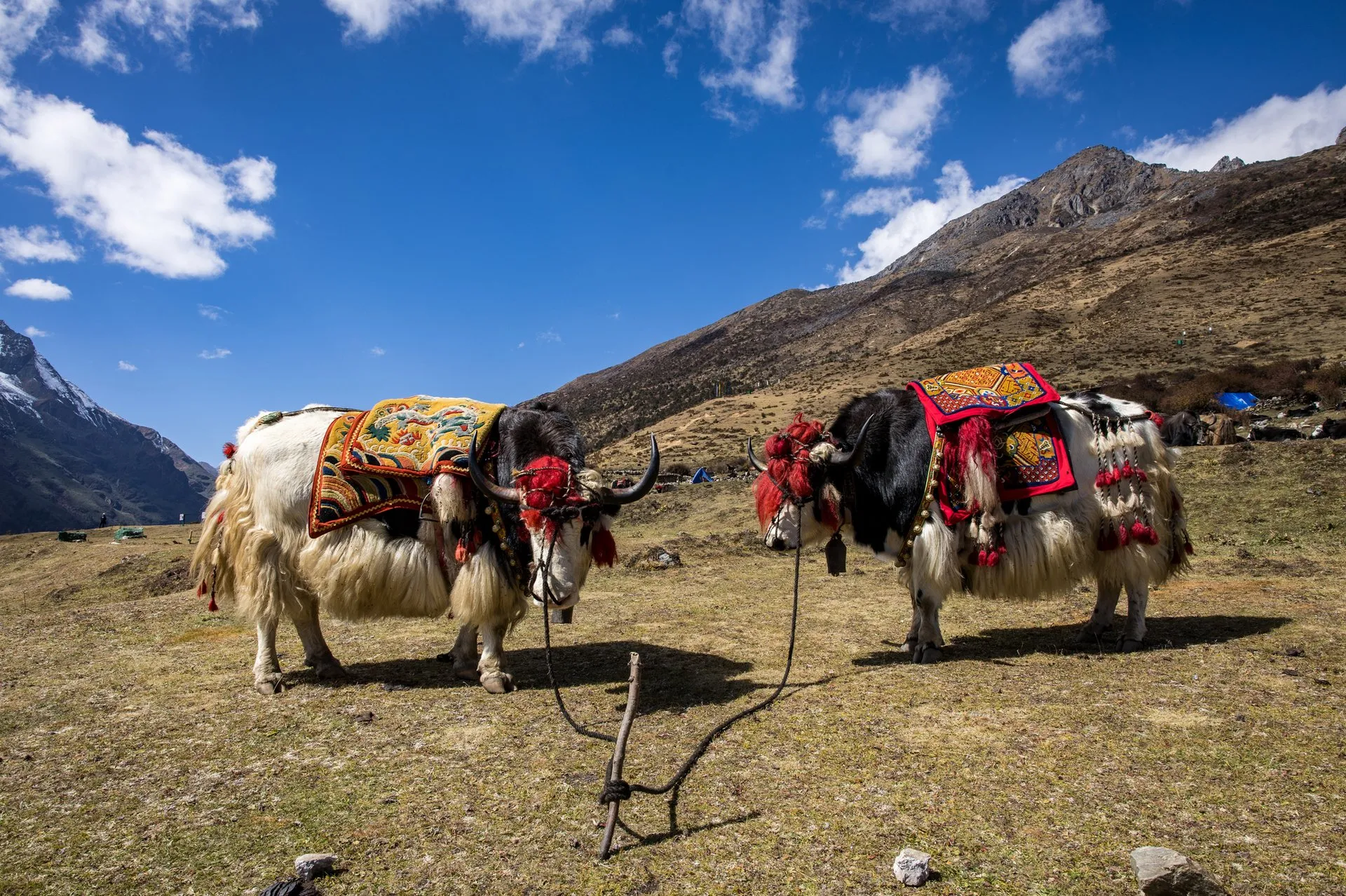
Yaks dressed for the festival in Laya on 23 October. Photo: Jitendra Raj Bajracharya / ICIMOD.
Images courtesy of ICIMOD.