Egypt lends almost all its Fayum portraits for a major exhibition in Rome
“Egypt and Rome. The Faces of Fayum” opens on 5 November at Rome's Ara Pacis Museum with more than 110 works, almost 50 of them portraits painted about 2,000 years ago for mummies. For the first time, Egypt is lending almost all the Fayum panels in its collections, which had never left its museums, according to the organisers. It runs until 2 May 2027.
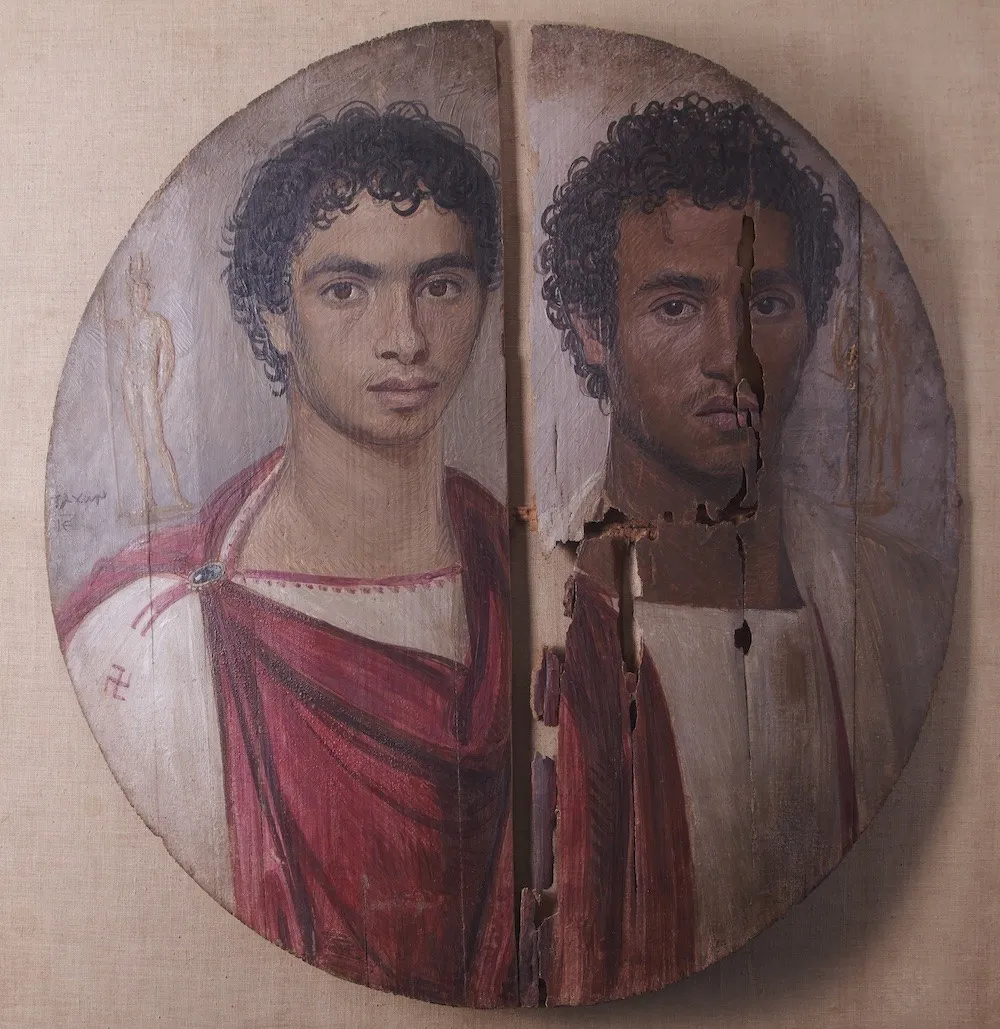
A young man with a neatly trimmed beard, a woman wearing the earrings she wore every day, another man with a mole on his nose. The Fayum portraits were painted about 2,000 years ago on wooden panels a few millimetres thick and placed over the face of the mummy, among the bandages. Fewer than a thousand survive worldwide, and almost 50 will be on show together in Rome from Thursday 5 November.
The exhibition “Egypt and Rome. The Faces of Fayum” fills the Ara Pacis Museum until 2 May 2027, with more than 110 works including panels, shrouds, funerary masks, marble busts and jewellery.
Panels that had never left Egypt
What makes it exceptional, the organisers say, is Egypt’s loan: for the first time it is sending almost all the Fayum panels in its collections, which had never left Egyptian museums. Among them is the Tondo of the Two Brothers from the Egyptian Museum in Cairo, one of the great works of ancient painting, which Italian specialists restored in Egypt for the show.
The Louvre is lending 23 pieces, including painted linen shrouds from Antinoe. Also arriving are the Getty Museum’s Isidora, the Eirene from Stuttgart, portraits from the Metropolitan Museum and a young face just unearthed by the University of Salento’s mission in Egypt, never exhibited before.
Faces with names
The pieces are fragile and rarely lent. Curators Claudio Parisi Presicce and Laura Petacco do not show them in isolation: they sit beside marble portraits from the Capitoline Museums and jewellery from Pompeii and Herculaneum similar to that worn by the people in the paintings. Together they show how Egyptian, Greek and Roman traditions mixed in Egypt between the first and third centuries AD.
“They are the most important painted images of antiquity from the Roman period,” said Massimiliano Smeriglio, Rome’s councillor for culture, at the presentation. The exhibition is promoted by the City of Rome through the Sovrintendenza Capitolina.