Stem cell therapy cuts osteoporosis fractures by 94% in first human trial
Ten women with severe osteoporosis received a single infusion of their own stem cells, tagged to home in on bone. Over the next two years, fractures in the group fell from eight a year to 0.5. The trial was small and had no control group; a larger one starts in 2027.
Today, 20 October, is World Osteoporosis Day, which raises awareness of the disease that weakens bones until a minor bump or fall can break them. It comes with encouraging news from Spain: a team at Virgen de la Arrixaca University Hospital, the University of Murcia and the Murcia Biohealth Research Institute (IMIB) has tested a therapy using each patient’s own stem cells that cut fractures by 94% in a first trial with ten women. The results were published in the journal Cell.
How it works
Doctors took about 60 millilitres of bone marrow from each participant’s hip. In the lab, they grew her mesenchymal stem cells – the cells that can turn into bone – and added a sugar to their surface. That tweak acts as a temporary “GPS”: once the cells are back in the bloodstream, it helps them stick to blood vessels in the bone marrow and reach damaged bone. It does not alter the cells’ DNA and wears off within about two days.
Each woman then received a single intravenous infusion of her own cells. The approach builds on work by researcher Robert Sackstein, who first showed it in mice in 2008. The Murcia team, led by José María Moraleda and Luis Linares, has now taken it into patients for the first time, working with the Miami Veterans Affairs Medical Center and the Spanish Advanced Therapies Network.
The results
- Who took part: 10 women aged 51 to 72 with severe osteoporosis, all of whom had already had at least one fragility fracture.
- Fractures: in the two years before treatment, the group had about eight a year; in the two years after the infusion, 0.5 a year. That is the 94% drop.
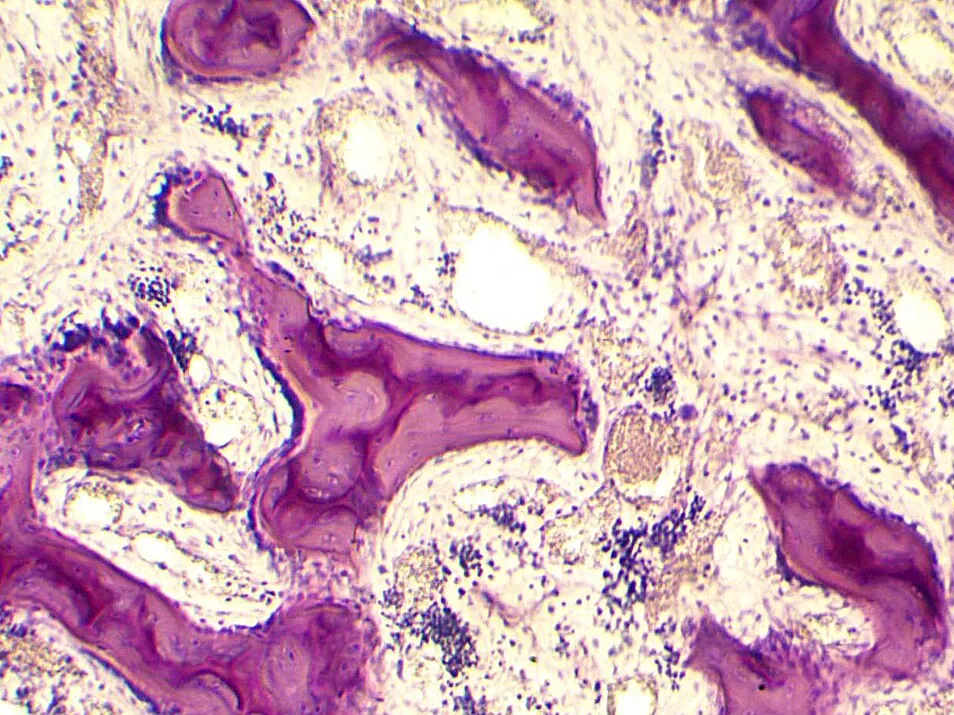
- Bone: biopsies four months later showed more bone tissue in 7 of the 10 women, and a CT-based measure of spongy bone quality had improved after two years.
- Safety: no serious side effects were linked to the treatment over a median follow-up of about six years.
- Patients also reported less pain and better mobility.
Reasons for caution
This was a phase 1 trial, designed mainly to check safety. Only ten women took part and there was no control group, so it is not yet possible to say how much of the benefit came from the cells: most participants were also taking standard osteoporosis drugs. Bone density measured with the usual DXA scan did not improve significantly across the group.
Even so, the result has turned heads. Ajit Varki, a physician-scientist at the University of California, San Diego, who was not involved, told Nature it was “quite remarkable”.
What’s next
The team is planning a larger trial for 2027 in women over 50, followed by studies across several hospitals and countries with hundreds of patients. Those are the steps needed to find out whether the therapy can reach the clinic.
According to the researchers, osteoporosis affects up to 500 million people worldwide and causes up to 37 million fragility fractures a year – which is why every advance matters.
Sources
- Cell · Glycocalyx-edited mesenchymal stem/stromal cell therapy in advanced osteoporosis (September 2026)
- ZME Science · A new 'living medicine' for osteoporosis cut fractures by 94 percent (22-09-2026)
- Cartagena Actualidad · Arrixaca therapy cuts osteoporosis fractures by 94% (21-09-2026, Spanish)
- International Osteoporosis Foundation · World Osteoporosis Day, 20 October