Drug-free electronic implant lowers blood sugar in diabetic mice
A team at ETH Zurich has built an implant that, when glucose rises, turns it into gluconate, a substance the body passes out in urine. In obese mice with type 2 diabetes it brought blood sugar back to normal within an hour, and after six weeks the animals weighed less. So far it has only been tested in mice: there are no human trials yet.
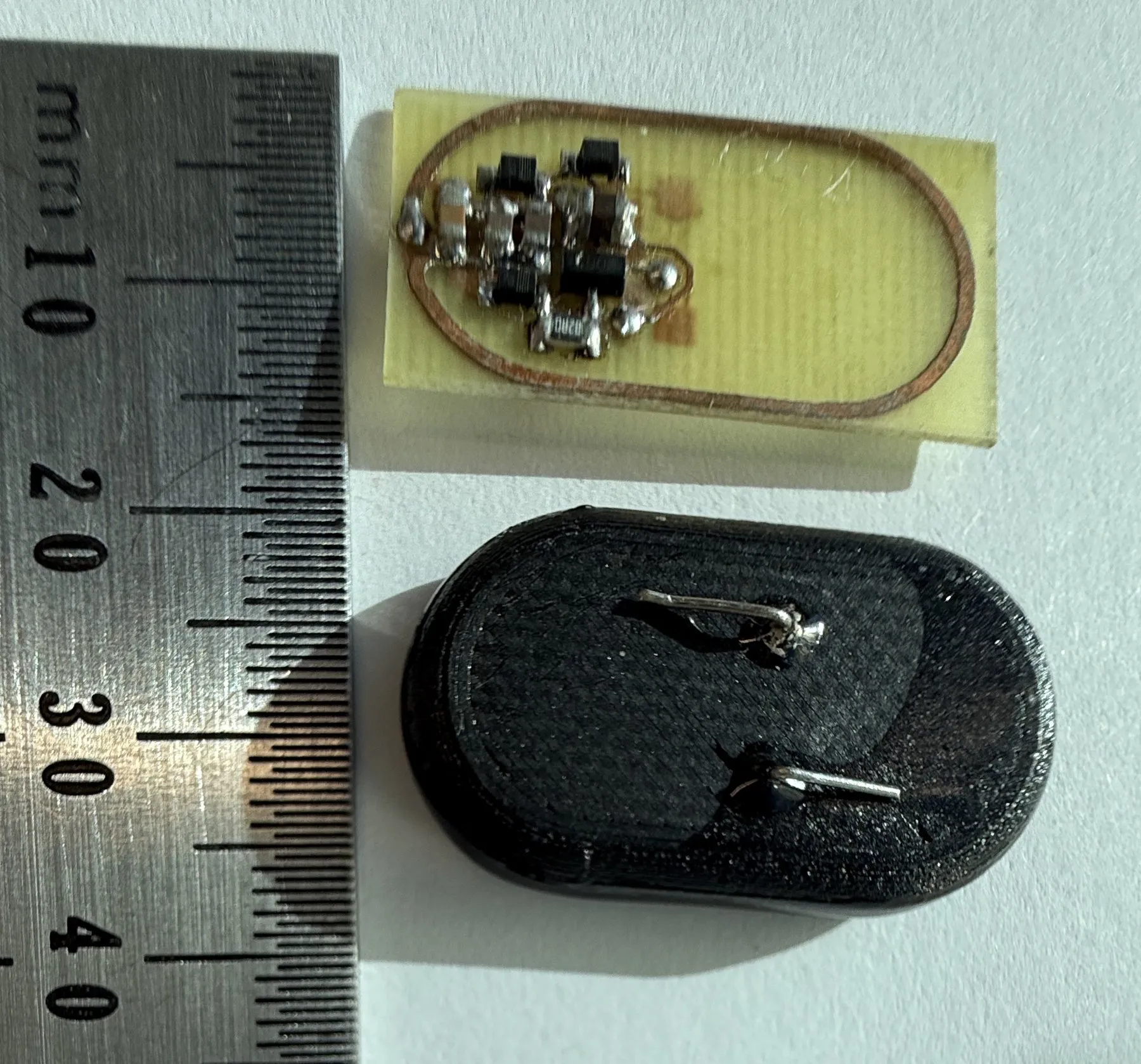
It fits between two fingers and carries no medicine. The implant built by Professor Martin Fussenegger’s team at ETH Zurich acts on glucose directly: when levels rise, it transforms it. The work, led by Debasis Maity and published in the journal Science, has only been tested in mice.
From sugar to urine
Inside the implant is a catalyst made of graphite felt studded with tiny gold clusters dotted with platinum particles. It is entirely inorganic, with no cells or enzymes. When switched on, it converts excess glucose into gluconate, which the kidneys pass out in urine. According to the team, that means less sugar is metabolised and stored as fat.
The device runs on very little power, about 0.75 volts, delivered wirelessly. Fussenegger says his experiments showed no tissue damage from electrical or heat effects.
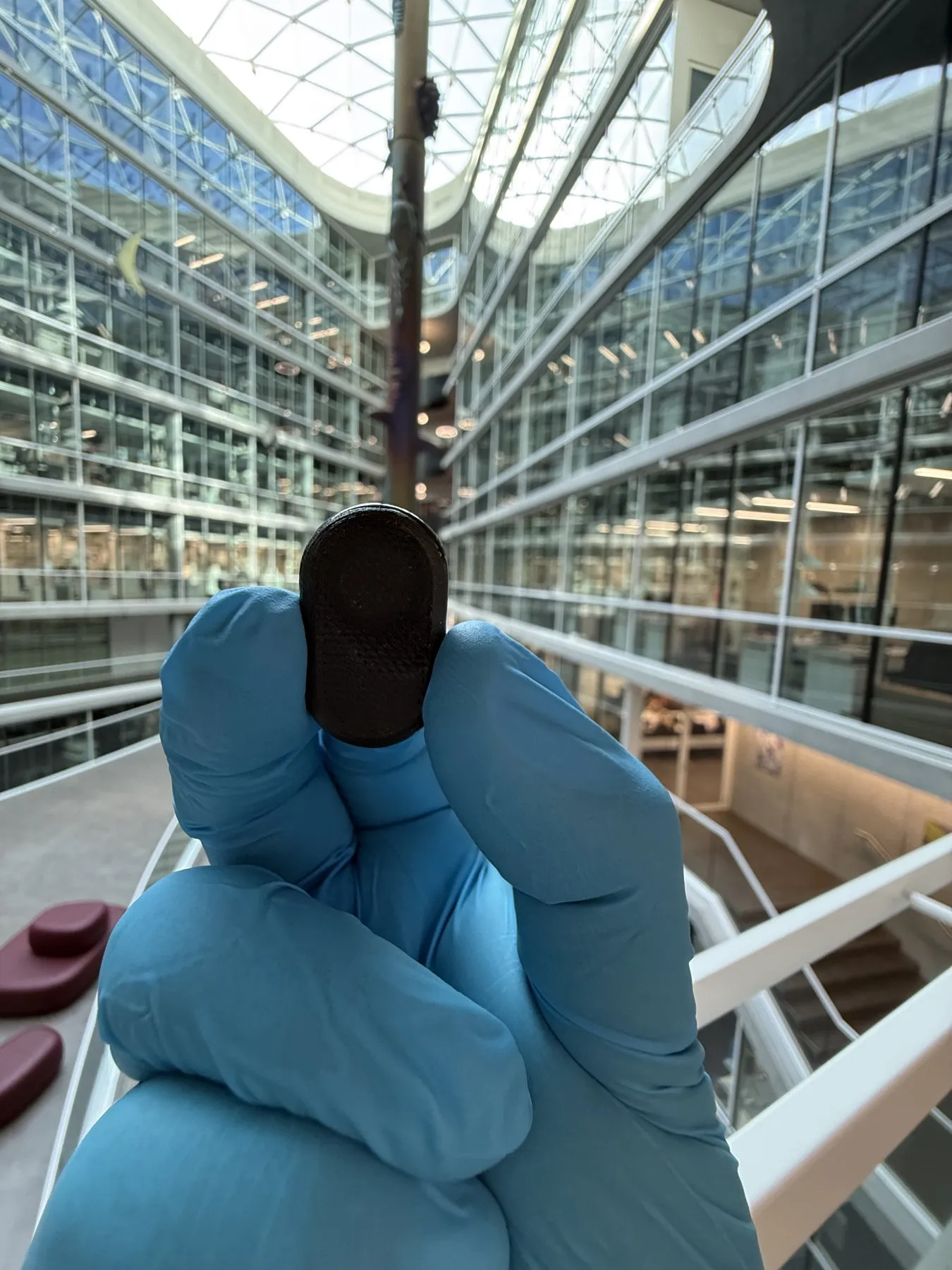
The implant’s casing. Photo: Debasis Maity and Martin Fussenegger, ETH Zurich.
It switches on after a meal
The system works as a closed loop. A standard glucose sensor worn on the upper arm tracks levels; when they rise after a meal, it signals a phone or smartwatch over Bluetooth, which switches the catalyst on. Once glucose reaches the target, it switches off. The sensors and wireless power units are already on the market.
In obese mice with type 2 diabetes, the implant brought glucose back to normal within one hour. Over six weeks it kept levels under control with repeated activations, with no dangerous drops in blood sugar. The animals lost weight and their triglycerides fell, and no effects on inflammation or behaviour were seen.
“We can take control of glucose directly, using electronics rather than drugs,” Fussenegger says.
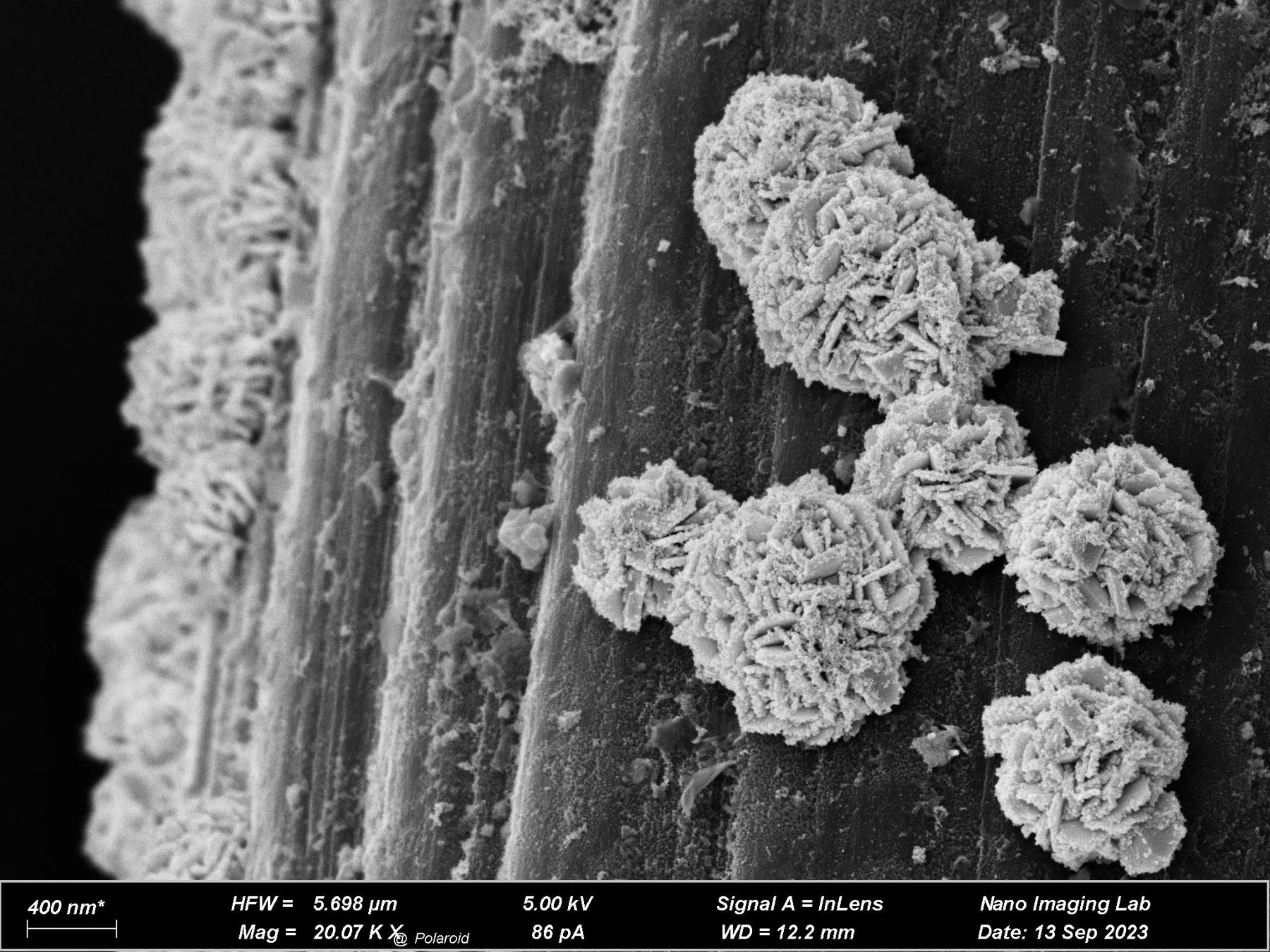
Electron microscope close-up of the implant’s material. Image: Debasis Maity and Martin Fussenegger, ETH Zurich.
Still a long way from patients
The team wants to develop the system into a medical device, but it has not yet been tested in people and the study gives no timeline. Nor is it known how it would behave inside the body over years. The researchers think the same idea could be used to regulate other disease-related substances in the body.
Sources
- Science · Wireless electrocatalytic closed-loop system for drug-free management of diabesity (Maity et al., 2026)
- News-Medical · Electronic implant lowers blood glucose and reduces weight in mice (23 Oct 2026)
- GEN · Wirelessly powered electronic implant ECHO enables drug-free management of diabesity (23 Oct 2026)